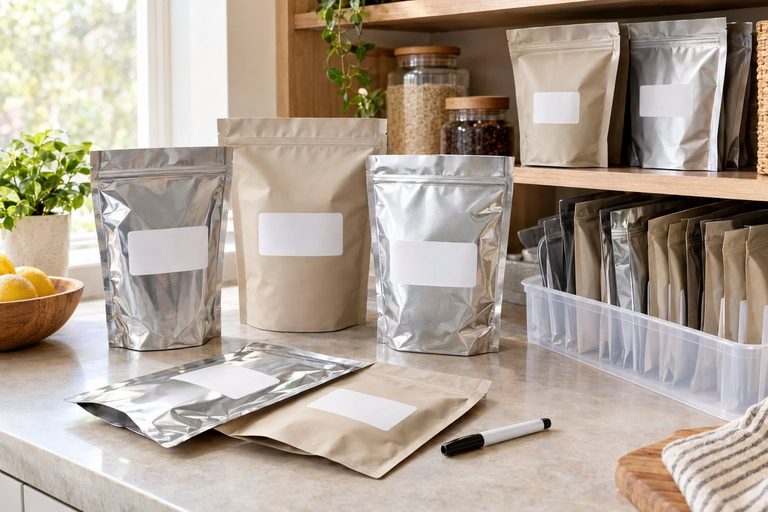
How to label and store Mylar bags so you know what's inside
Learn what to write on Mylar food bags, which pens last, and how to store dry food with oxygen absorbers so you can rotate it safely.
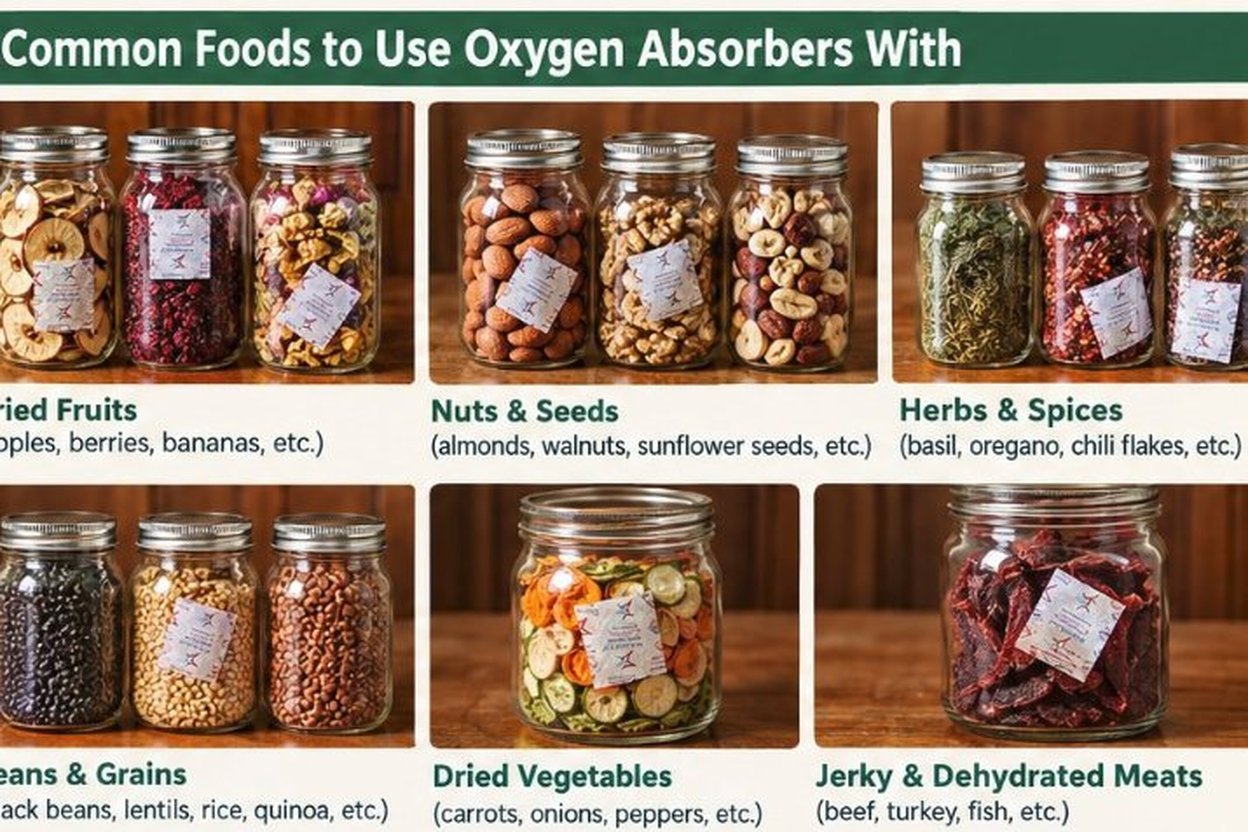
Which foods benefit from oxygen absorbers, which don't need them, and which are unsafe with them. Includes sizing and a pre-sealing checklist.
You've just come home from a fall stock-up with a 25-pound sack of rice, a bag of pinto beans and a canister of oats. Now you're at the kitchen table with buckets, Mylar bags and a pack of little iron packets, trying to decide what gets one. Here's the short version. Oxygen absorbers belong in dry, low-moisture food sealed in packaging that oxygen can't get through. They do nothing in short-term pantry food. In anything moist, they're a real safety risk.
Extension guidance from Utah State University says food sealed airtight with oxygen absorbers needs to be dry: about 10% moisture or less. The packaging has to keep oxygen out too, which means a Mylar-style bag, a metal #10 can or a canning jar. When both of those are true, an absorber is worth the few cents it costs.
These foods are a good fit:
Absorbers do two jobs for these foods. They slow the stale flavors and quality loss that oxygen causes, and they protect against insects. USU notes that the low-oxygen sealed container itself guards against infestation.
You don't need them for food you'll eat in the next few months. The box of oats you go through by Christmas or the rice you cook every week will be gone long before oxygen becomes a problem. Absorbers are for the deep pantry: the buckets in the basement you might not open for years.
Wheat is the one big exception. USU says whole wheat doesn't need to be stored without oxygen unless insects are present. Plenty of people still add an absorber to wheat buckets to keep bugs out, but it's optional.
An oxygen absorber is a small packet of iron powder. When you open its outer package, the iron starts reacting with the oxygen and the little bit of moisture inside your container. In other words, it rusts, and rusting uses up oxygen. Air is about one-fifth oxygen, and the rest is mostly nitrogen, which doesn't harm food. A working absorber leaves the nitrogen behind. That's why a well-sealed Mylar bag often pulls in tight and looks a little vacuum-packed a day or two later.
USU's food storage material says absorbers can bring oxygen in a package below 0.01%, but only in packaging that blocks oxygen, such as metal cans or foil-plastic Mylar-style bags. Container choice matters more than most people expect:
USU also notes that absorber packets are made for different food moisture levels, so buy ones sold for dried foods.
So why go to the trouble? Oxygen is behind most of the slow decline in stored food. It turns oils rancid, makes flavors stale, breaks down vitamins, and lets insect eggs that came home in the bag hatch and feed.
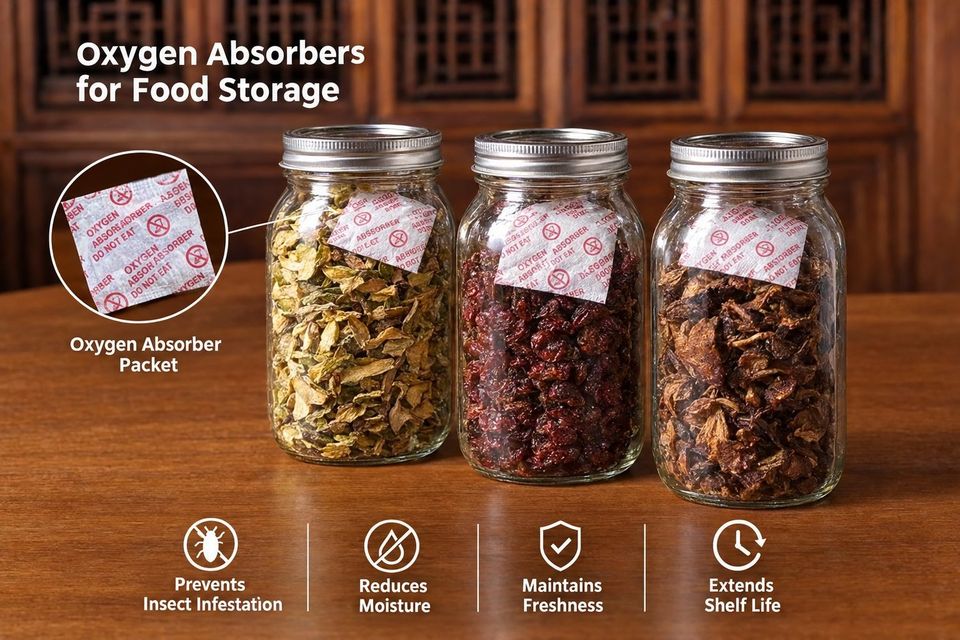
These staples are the core of most long-term pantries, and they're where absorbers do the most good.
White rice. This is the best-documented example. A 2004 Brigham Young University study tasted white rice stored up to 30 years in oxygen-reduced #10 cans. Regular white rice showed no significant decline in aroma, texture, flavor or overall acceptability as it aged. More than 88% of taste panelists said the 30-year-old rice was acceptable for emergency use. The study doesn't say whether the cans used absorbers or another method, but it shows what dry white rice can do with the oxygen removed. Parboiled rice did not hold up as well: its appearance, flavor and acceptability all declined with age.
Dried beans. USU says absorbers extend shelf life and reduce off-flavors in beans. Vendor estimates for beans with an absorber run 10 years or more. Old beans can take longer to soften when you cook them, so rotate them when you can.
Oats. Rolled oats are a classic bucket food. Vendor shelf-life estimates with an absorber run 25–30 years.
Dried milk. USU lists it as a good candidate, again for longer shelf life and fewer off-flavors.
Dried vegetables and freeze-dried food. Both fit as long as they're truly dry. Vendor estimates for freeze-dried food run 25 years or more in sealed packaging.
Spices and seasonings. USU says absorbers prevent oxidation, which is what fades color and flavor. Vendors suggest 5–10 years or more.
Wheat. As noted above, it's optional unless you have bugs to worry about.
A word on these numbers: apart from the BYU rice study, most long shelf-life figures come from sellers, not labs. Treat them as rough estimates. Pasta shows how far apart the claims can be. One seller says plain dry pasta lasts 8–10 years with an absorber and 1–2 years without, and other sources give different numbers. A safe approach is to write the date on everything and eat the oldest first.
This section is the important one. Never put oxygen absorbers in with moist food.
USU warns that botulism can result when moist products are stored in packaging that reduces oxygen. The bacteria behind botulism grow in moist places with no oxygen. A sealed bag of damp food with an absorber inside gives them exactly that, and you can't count on seeing or smelling the problem. That's why the 10%-moisture rule is about safety, not quality.
Keep absorbers away from these foods:
Home-dried food deserves extra care. If you ran the dehydrator on the last of the garden this fall, check the moisture before sealing anything with an absorber. Some sellers recommend a food moisture meter for things like jerky and fruit leather. At the least, food that's still soft, bendable or tacky isn't dry enough for oxygen-free storage. Dry it more, or keep it in the freezer.
Some foods just don't need an absorber. White sugar, salt and honey are commonly said to keep indefinitely as long as they stay dry and sealed. Absorbers are commonly advised against for them, and some sellers say the packet can make sugar and salt clump. Sugar and salt can go straight into a sealed bucket or jar, and honey can stay in its own jar.
Some foods will spoil no matter what. Brown rice and whole-wheat flour hold natural oils that go rancid with time even when oxygen is low. Sellers commonly put brown rice at about 1–2 years even with an absorber, and suggest rotating whole-wheat flour about once a year. Keep these in your working pantry, not the deep one. If you want whole-wheat flour on hand long-term, store whole wheat berries and grind as you go.
Absorbers are sold by capacity in cubic centimeters (cc). No extension service publishes a sizing standard, so the numbers below are common guidance from sellers and food-storage writers. They don't all agree, so when in doubt, go bigger. A packet that's too large costs a few cents more, while one that's too small leaves oxygen behind.
How you handle absorbers matters as much as the size. They start working as soon as their package is opened, and they'll use themselves up on your kitchen air if they sit out. One guide says to keep them out no more than about 30 minutes.
Before you seal anything with an absorber, run through these:
If you're filling buckets this fall while the Thanksgiving baking supplies are on sale, set aside an hour to do it all at once. It's one evening of work for a pantry that will still be good many winters from now.
Learn what to write on Mylar food bags, which pens last, and how to store dry food with oxygen absorbers so you can rotate it safely.
The 4-hour fridge rule, the 48-hour full freezer, and the 40-degree line. What to keep, what to toss, and how to make your cold food last longer in an outage.
When the stove and microwave go dark, you still have to eat. Food safety in a dead fridge and freezer, safe ways to cook, the deadly ones, and a few no-cook meals…