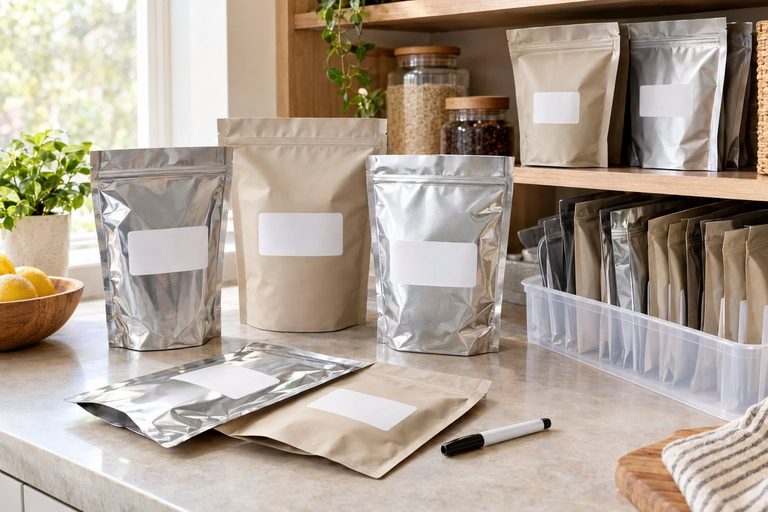
How to label and store Mylar bags so you know what's inside
Learn what to write on Mylar food bags, which pens last, and how to store dry food with oxygen absorbers so you can rotate it safely.
The 4-hour fridge rule, the 48-hour full freezer, and the 40-degree line. What to keep, what to toss, and how to make your cold food last longer in an outage.
The power's been off since yesterday. The fridge is quiet. What's still safe to eat?
Here's what U.S. food safety guidance says, in plain words.
A cheap appliance thermometer in the fridge and freezer tells you where you stand. Put them in now, before the outage.
If it still has ice crystals or is 40°F or below, you can usually refreeze it. The texture may suffer.
Throw it out. Never taste food to see if it's safe. Some of the bacteria that make you sick don't change the smell or taste.
Insulin and other cold medicines have their own rules. Ask your pharmacist before an outage.
Photo by Couleur on Pixabay.
Learn what to write on Mylar food bags, which pens last, and how to store dry food with oxygen absorbers so you can rotate it safely.
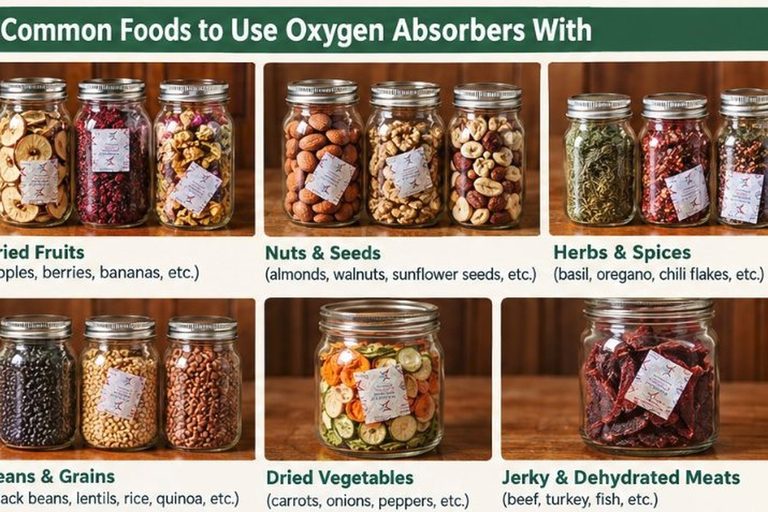
Which foods benefit from oxygen absorbers, which don't need them, and which are unsafe with them. Includes sizing and a pre-sealing checklist.
When the stove and microwave go dark, you still have to eat. Food safety in a dead fridge and freezer, safe ways to cook, the deadly ones, and a few no-cook meals…