A CO alarm on every floor before the first outage night
Check that every floor and sleeping area has a battery-backup CO alarm, placed and tested, before the first winter power outage.

A covered porch counts as indoors for carbon monoxide. Learn the 20-foot rule, safe generator placement, and how to set up CO alarms.
The power has been out since supper and freezing rain is ticking on the gutters. The generator is fueled and ready, and the covered porch looks like the perfect spot: dry, close to the extension cords, and only a few steps from the door. That's exactly why it's the wrong place. For carbon monoxide, a covered porch counts as inside. Federal safety officials say plainly that a generator should never run on a porch or in a carport. It belongs out in the open, at least 20 feet from the house.
The U.S. Consumer Product Safety Commission (CPSC) states the rule directly: "Never operate a portable generator inside a home, garage, basement, crawlspace, shed or on the porch." Ahead of Hurricane Idalia in 2023, the agency went further and said not to run a generator on an outside porch or in a carport because those spots are too close to the home.
The New York State Department of Health puts porches, carports and breezeways in the same group. It calls them "partly enclosed areas" and says a generator should never be used in one.
The reason is simple. A porch roof and a wall or two hold exhaust in place instead of letting it blow away, and that trapped air sits right beside your front door, your windows and whatever gaps the house has. An open driveway lets the wind carry exhaust off. A porch keeps it next to the house.
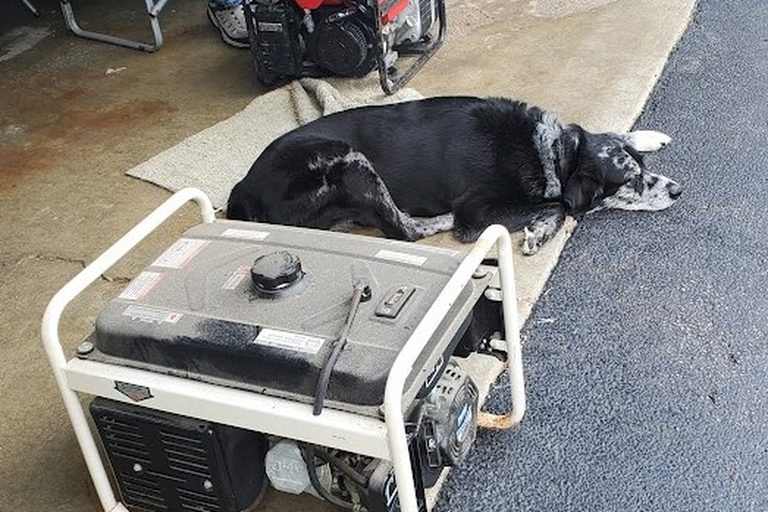
The CPSC's rule for where a generator does belong is short: outdoors only, at least 20 feet from the house, with the exhaust pointed away from the home and other buildings.
Carbon monoxide has no smell and no color. You can't see a haze or notice a stink, and you won't get a warning cough. A generator can be filling the porch with CO while everything seems normal.
Many people figure that cracking a door or opening a few windows takes care of it. The CPSC says it doesn't. Opening doors and windows does not give enough ventilation to prevent CO from building up to deadly levels. An open door near a running generator can actually work against you by giving the exhaust an easy path inside.
Generator deaths tend to happen in one of two ways. Either the generator is in an enclosed or partly enclosed space like a garage, shed, carport or porch, or it's outdoors but too close to an open door, window or vent. Both put the exhaust where people breathe.
The numbers are steady from year to year. According to the CPSC's 2022 report, about 85 people in the U.S. die each year from carbon monoxide from gasoline-powered portable generators, and 81% of those deaths happen in residential locations. The leading reasons people were running generators in those cases were weather-related outages and utility shut-offs, the same situations a Midwest household plans for every fall and winter.
The working rule is 20 feet from the house, with the exhaust pointed away from your home and any other building. Twenty feet is roughly the length of a full-size pickup plus a bit more, so pace it out. It's farther than most people guess.
A few details make that distance actually work:
Whole-home standby generators are bolted in place, but placement matters for them too. A CPSC study recommends keeping stationary generators at least 25 feet from the home. Current National Fire Protection Association guidance is 5 feet, and that guidance is voluntary. An NFPA committee is reviewing it, and any change could take a year or more. If a standby unit is in your plans, ask the installer and your local code office about distance before the pad is poured, because local rules vary.
Rain is the real reason people head for the porch. The CDC's guidance is to run the generator outside, in a dry area, at least 20 feet from your home. Roof and walls are not the way to get there. Choose the spot ahead of time, ideally on a calm fall afternoon well before the first ice storm. Look for level ground that doesn't hold water. Then check the owner's manual for what that manufacturer allows for weather protection. A homemade box or lean-to that closes in the generator just rebuilds the partly enclosed space you were trying to avoid.
The CPSC also suggests considering generators that shut off automatically when CO builds to high levels. If you're shopping for one this season, look for that feature.
Deaths are counted. Close calls usually aren't, and there are far more of them. A CPSC study of Southeast Louisiana fire department data after Hurricane Ida in 2021 found that carbon monoxide had gotten into 105 homes. People in 12 of those homes had symptoms, and in one home nine people became ill. The study focused on stationary generators, which are installed outside and permanently. Its conclusion applies to anyone who thinks "outside" automatically means "safe":
"It should never be assumed that CO from a stationary generator cannot infiltrate the home."
The people most at risk are the ones who can't notice it. The CPSC warns that exposed people may become unconscious before they recognize symptoms like nausea, dizziness or weakness. A sleeping household on the third night of an outage, with the generator running all night, is exactly the scenario these rules are written for.
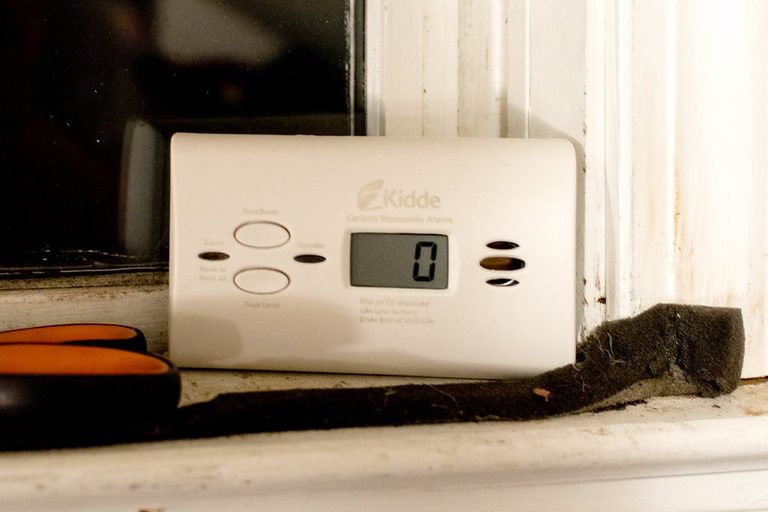
Good placement is the first layer of protection. A carbon monoxide alarm is the backup. During an outage, a hardwired alarm with no battery backup won't work, so the type of alarm matters.
The CPSC recommends:
Fall is a good time to check all of this. Many households already change smoke alarm batteries when the clocks change, so add the CO alarms to that job. Before Thanksgiving, when the house fills with guests and the oven runs all day, check that every alarm still beeps when you press test.
Know the warning signs: nausea, dizziness and weakness, which are easy to blame on a long, cold day. Because a person can pass out before connecting the dots, the alarm is the warning to trust.
If the alarm sounds, don't look for the cause and don't wait to see if it stops. Get everyone outside to fresh air right away, then call 911. For questions about symptoms after you're out and safe, Poison Control is at 1-800-222-1222. Don't go back in until responders say it's clear.
Photo: Harlow House porch - Troutdale Oregon by Ian Poellet, CC BY-SA 4.0.
Check that every floor and sleeping area has a battery-backup CO alarm, placed and tested, before the first winter power outage.
Bluetti Elite 100 vs. Jackery Explorer 1000 compared on runtime, solar charging, and price, with a clear pick for keeping a home running through an outage.
Use one Saturday before the first freeze to start your generator, test smoke and CO alarms, and disconnect, drain, and cover outdoor faucets.