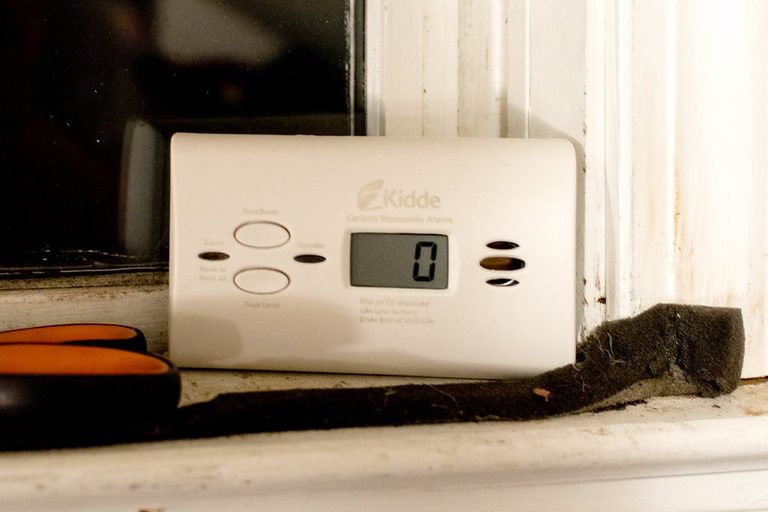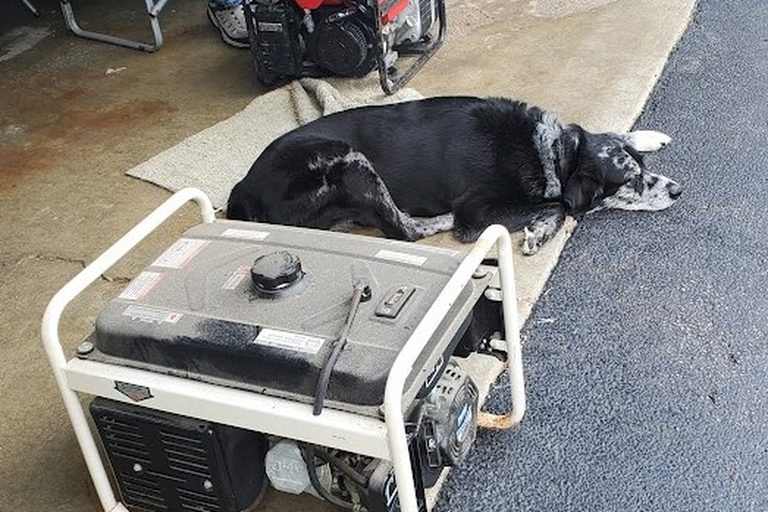
The covered porch is still inside for carbon monoxide
A covered porch counts as indoors for carbon monoxide. Learn the 20-foot rule, safe generator placement, and how to set up CO alarms.
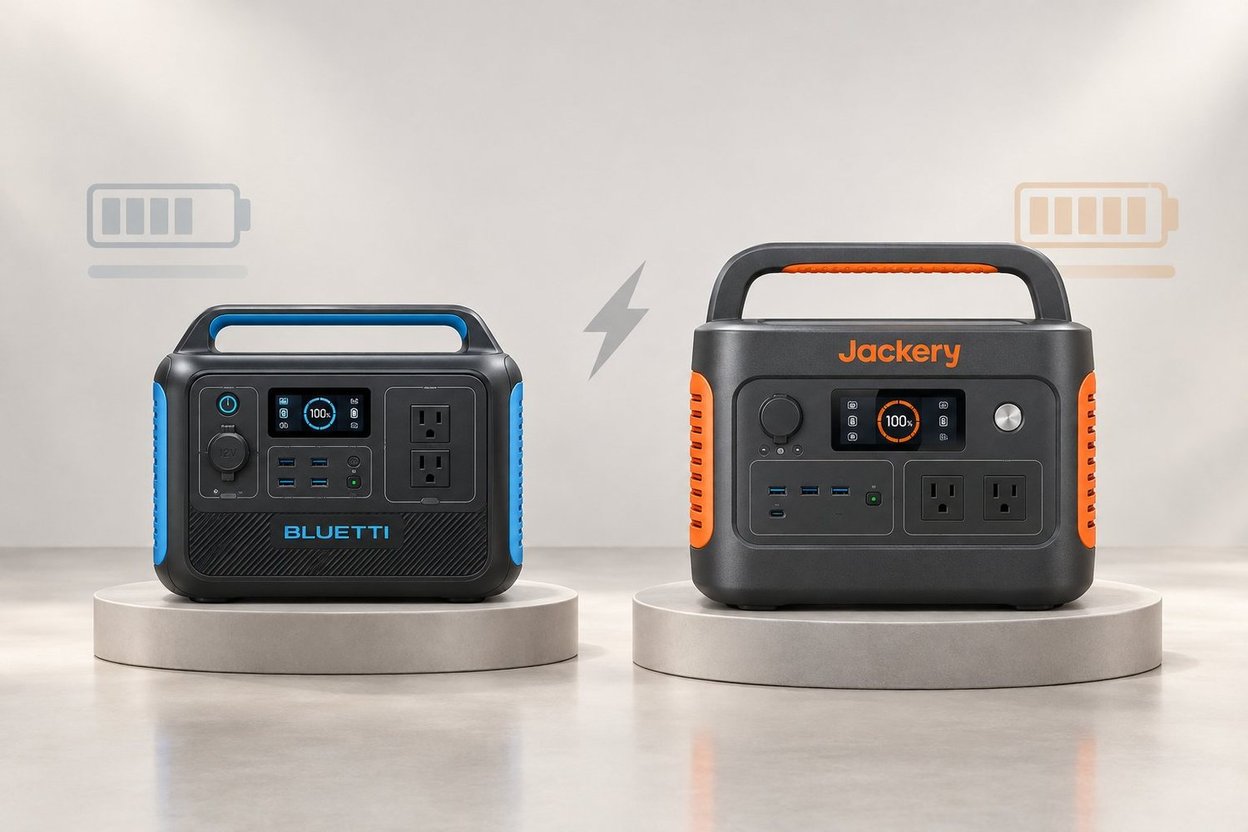
Bluetti Elite 100 vs. Jackery Explorer 1000 compared on runtime, solar charging, and price, with a clear pick for keeping a home running through an outage.
The ice is ticking on the windows, the lights flicker twice, and the furnace goes quiet. That's when you start wondering whether a battery power station would have been worth it. If you're choosing between Bluetti's Elite 100 and Jackery's Explorer 1000, both will keep your fridge cold, your phones charged and your Wi-Fi on through a long night. For most households the Bluetti is the better buy. It puts out more power, takes in much more solar and usually sells for less. Below is what each one runs, for how long, and how to refill it.
First, the names. Both companies have updated these models. Bluetti's current version is the Elite 100 V2, and Jackery's is the Explorer 1000 v2. If you see older stock under the original names, these are the models to compare against.
The two are closer than the marketing suggests. OutdoorGearLab scored the Jackery 67 (7th of 14) and the Bluetti 65 (9th of 14). Both use LiFePO4 (lithium iron phosphate) batteries, which handle years of charging well. Both also offer UPS-style switchover: plug a lamp, router or fridge into the station, plug the station into the wall, and it picks up the load when the grid drops.
Where they differ:
Neither one runs a whole house. Think of either as a way to keep the essentials going: food cold, people connected and a few lights on.
Bluetti Elite 100 V2 - Rated capacity: 1,024 Wh - Measured usable capacity (OutdoorGearLab): 890 Wh, about 87% - Continuous AC output: 1,800 W - Battery: LiFePO4, rated for 4,000+ cycles to 80% capacity - Weight: about 25 lb - UPS switchover: listed at 10 milliseconds or less - Warranty: 5 years per retailer listings (Bluetti's product page doesn't state the length, so confirm before you buy)
Jackery Explorer 1000 v2 - Rated capacity: 1,070 Wh - Measured usable capacity (OutdoorGearLab): 910 Wh, about 85% - Continuous AC output: 1,500 W, with 3,000 W surge - Battery: LiFePO4 - Weight: about 24 lb (TechRadar lists 23.8 lb, OutdoorGearLab 24.4 lb) - UPS: supported - Warranty: 5 years - AC outlets: three, spaced tightly
The measured capacity matters more than the number on the box. Every power station loses some energy turning battery power into household AC, so you never get the full rating. In testing, the usable gap between these two was only 20 Wh. That's about ten minutes of a fridge running. For outage planning, treat them as equal on capacity.
The Jackery's three AC outlets are worth a look. If your plan includes the fridge, a lamp, the router and a fan, you'll probably need a power strip, and bulky plugs can block a neighboring outlet.
Both units kept their cooling fans quiet even near maximum output, which helps when one is running in the kitchen overnight.
Here's a typical first night of a winter outage. The wattages are common ballpark figures, not tested numbers, and the runtimes are our own arithmetic from OutdoorGearLab's measured capacity. Your appliances will differ, so check the labels or use a plug-in watt meter.
That's roughly 120 W. At that draw:
Add a 40 W fan to circulate heat from a wood stove or fireplace, and the total rises to about 160 W. That gives roughly 5.6 hours on the Bluetti and 5.7 hours on the Jackery.
To stretch a charge overnight, run the fridge only part of the time. A closed fridge holds its temperature for hours. With the fridge alone at 80 W, either unit lasts about 11 hours.
The output limit decides which big appliances you can use. Both can run a coffee maker or most microwaves for a few minutes; Bluetti specifically lists coffee makers among the high-draw items it handles. The difference shows up with a space heater. Most plug-in space heaters draw about 1,500 W on high, which is right at the Jackery's limit, while the Bluetti's 1,800 W gives it room to spare.
Being able to run a heater doesn't mean you should, though. At 1,500 W, a full charge lasts only about 35 minutes. A space heater uses up a 1 kWh battery faster than almost anything else in the house.
Neither unit runs a well pump or central air. Neither can power a furnace through its normal hardwired circuit either. Connecting any power source to house wiring needs a proper transfer switch installed by a licensed electrician.
A battery is only as useful as your ability to refill it, and that's where the Bluetti pulls clearly ahead.
Solar. The Bluetti takes up to 1,000 W of solar input, which OutdoorGearLab calls best in class for units this size. The Jackery tops out at 400 W. Under ideal conditions, our own arithmetic says that's roughly an hour to refill the Bluetti with a full 1,000 W array, versus well over two hours for the Jackery at 400 W. Real panels rarely produce their full rating, though. Short November days, low sun and snow on the panels all cut output, so actual times will be longer for both. That's why the extra input matters: on a gray Midwest day, more panels on the Bluetti can still collect useful power when the light is weak.
Wall charging. When the grid is up, or you're charging from a properly placed generator, OutdoorGearLab measured the Bluetti at 512 Wh per hour (about 2 hours from empty) and the Jackery at 563 Wh per hour (just under 2 hours). The reviewers called both slow compared with rivals.
Fast-charge modes. Both brands offer a faster option, and both come with trade-offs:
Save the fast modes for when a storm is coming and you need a full battery quickly. For everyday top-ups, the standard modes go easier on the battery.
If you recharge from a gas generator, keep it outside and well away from doors, windows and vents. Carbon monoxide from a generator in a garage or too close to the house kills people every storm season.
Both units list at $799, but almost nobody pays that.
Prices change weekly, and fall sales tend to get better heading into Thanksgiving and the holiday season. If you can wait a few weeks, you'll probably save money. Don't wait so long that the first ice storm arrives before the box does.
Pick the Bluetti if you want the most capability for the money. It has more power for the occasional coffee pot or heater, much stronger solar charging for multi-day outages, and usually a lower price.
Pick the Jackery if you find it on a better sale, you prefer its app and fast-charge setup, or you're shaving every half-pound for carrying. On capacity and build quality, it's essentially even with the Bluetti.
If your outages tend to last days, or you need a well pump, sump pump or furnace kept running, a 1 kWh power station isn't the right tool. Look instead at a larger battery system or a portable generator with a transfer switch, or a standby generator installed by a licensed electrician. Either power station handles a night without power well, but they aren't sized for a week-long outage.
A covered porch counts as indoors for carbon monoxide. Learn the 20-foot rule, safe generator placement, and how to set up CO alarms.
Check that every floor and sleeping area has a battery-backup CO alarm, placed and tested, before the first winter power outage.
Use one Saturday before the first freeze to start your generator, test smoke and CO alarms, and disconnect, drain, and cover outdoor faucets.