Sanitation and Hygiene When the Water Is Off
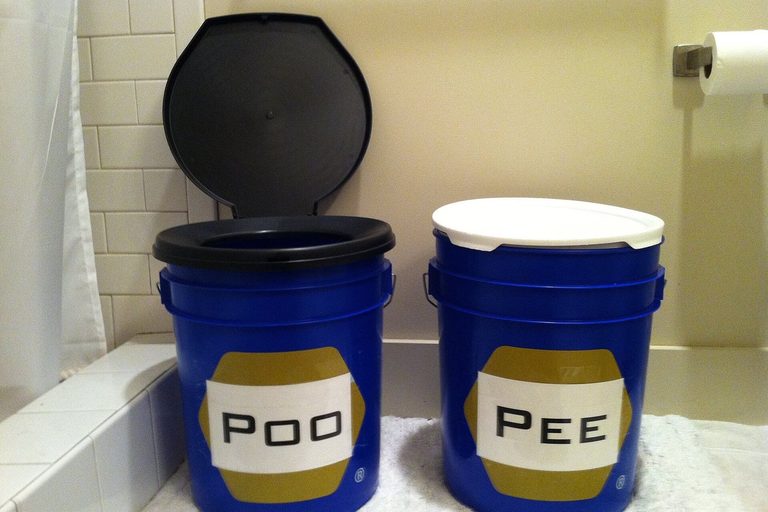
How to set up a bucket toilet, mix bleach correctly for each job, wash hands with a jug of water, and handle trash when the taps go dry.
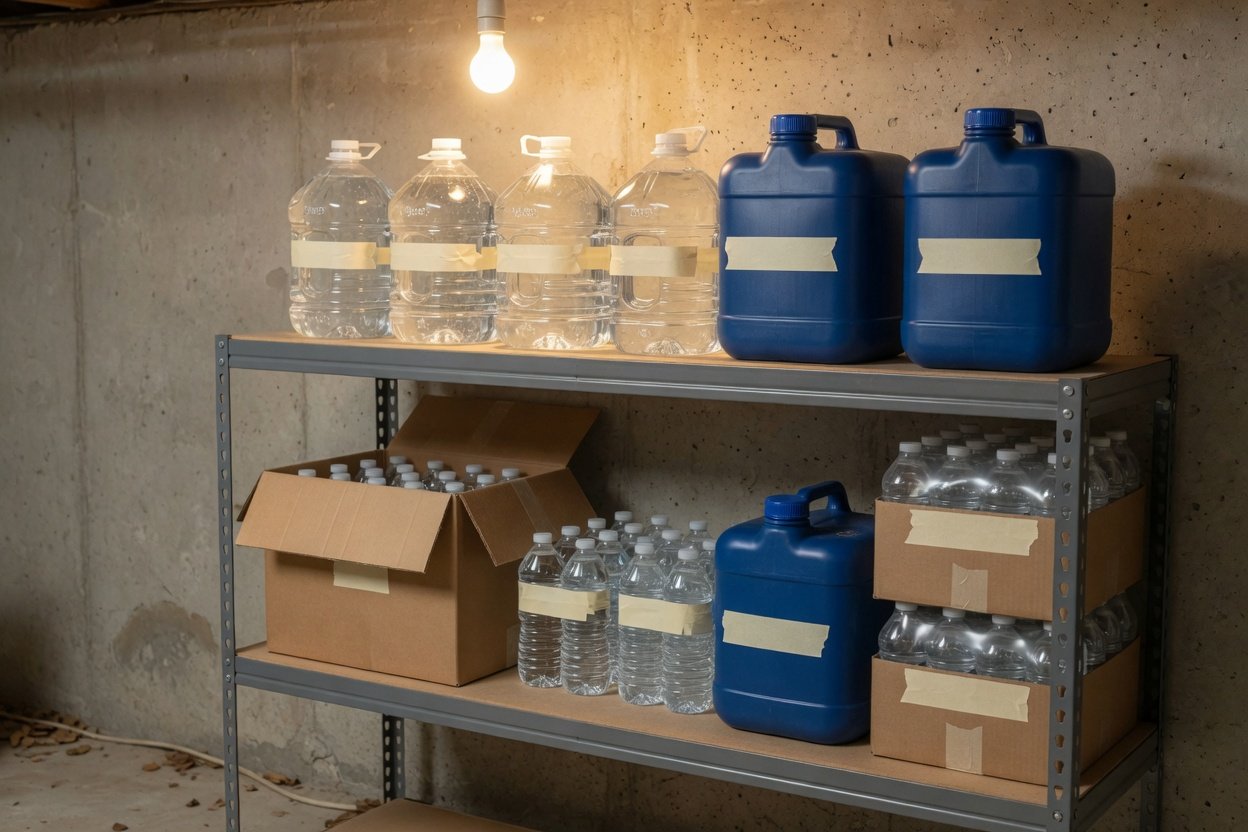
Water is the first thing you'll run out of in an emergency. How much to store, what to store it in, how long it keeps, and simple ways to rotate it so it's always fresh.
People can go weeks without food but only days without water. In a disaster, water mains break, wells lose power, and boil orders last for days. Stores sell out of bottled water within hours of a storm warning. Storing water is the single most important prep, and the cheapest.
Ready.gov's guideline: at least one gallon per person per day for several days, for drinking and basic sanitation. More is better:
A family of four needs 12 gallons for three days, 28 gallons for a week, 56 for two weeks. Start with three days, build to two weeks.
Cool, dark, off concrete floors (put it on a shelf or pallet), away from gasoline, chemicals and pesticides. Spread it around the house in case one area becomes unreachable.
Boiling, filtering with a quality filter, or disinfecting with unscented household bleach (following official instructions for the amount) can make questionable water safer. We'll cover purification in its own guide.
Water is the foundation of every other prep. Put the first three days in the basement this week. See the rest of the 72-hour kit.
How to set up a bucket toilet, mix bleach correctly for each job, wash hands with a jug of water, and handle trash when the taps go dry.
No water pressure means no flush. How to flush with a bucket, when to stop flushing entirely, and the simple bucket-and-bag setup that keeps a house sanitary.
No power means no well pump, and no water. How much is left in the pressure tank and pipes, how to stretch it, and what it takes to run a well pump…