When the Toilet Won't Flush: Sanitation in an Outage
No water pressure means no flush. How to flush with a bucket, when to stop flushing entirely, and the simple bucket-and-bag setup that keeps a house sanitary.
How to set up a bucket toilet, mix bleach correctly for each job, wash hands with a jug of water, and handle trash when the taps go dry.
When the water is off you need four things: a bucket toilet lined with two trash bags and dry cat litter, the right bleach mix for each job, a jug-and-soap station for handwashing, and a sealed, out-of-the-way spot for trash and waste bags. Bleach is mixed differently depending on what it's for. Drinking water gets 8 drops per gallon of 6% bleach. Dishes get 1 tablespoon per gallon. Surfaces get 5 tablespoons per gallon. Don't mix those up.
The rest of this post goes through each one: what to buy, how to set it up, and how to keep a house of four from getting sick over a long weekend with dry taps.
The answer changes depending on why the water stopped.
If you're on a well, power is usually the problem, and your septic system still takes waste. Our post on the water a well still has when the power is out covers getting more out of it.
For toilet-only details, see when the toilet won't flush. Here's the short version.
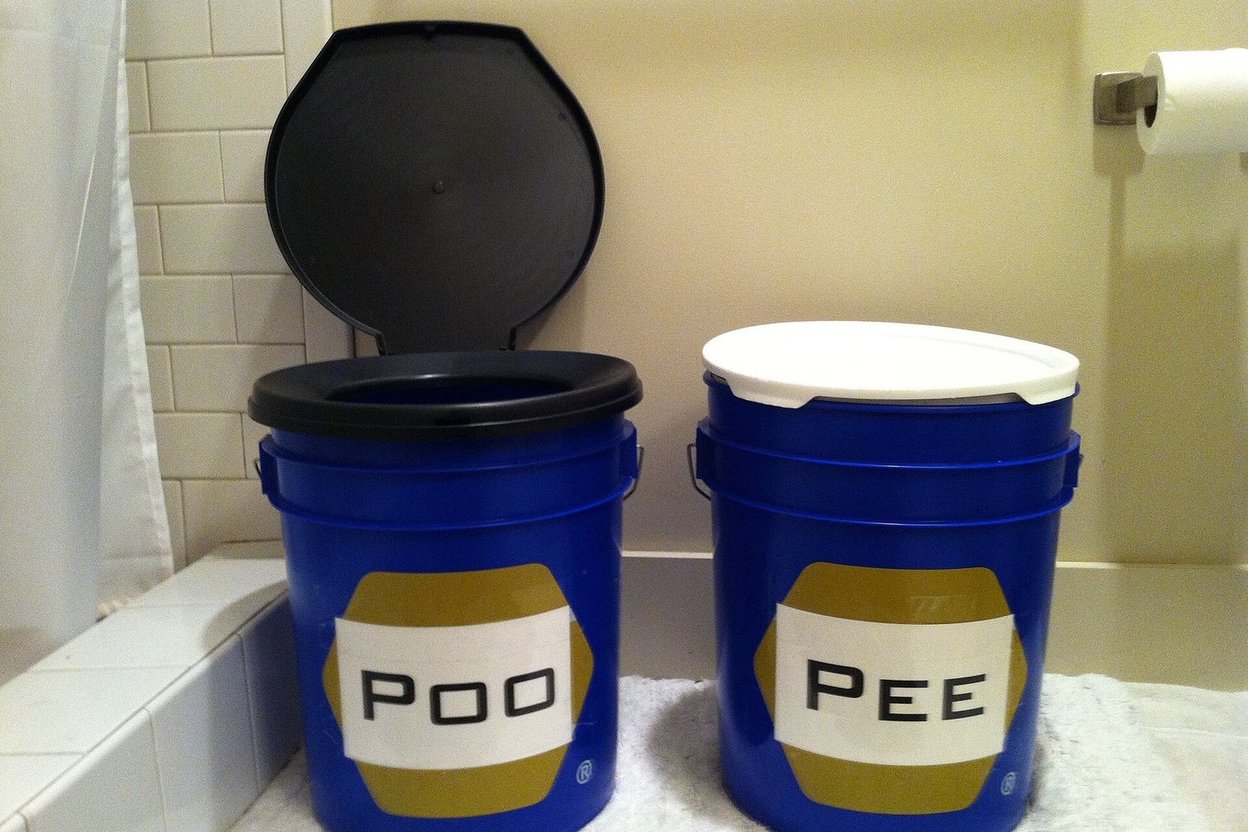
King County, Washington's public health department gives the basic method. Line a 5-gallon pail, or the toilet bowl itself, with two heavy-duty plastic garbage bags. Put absorbent material in the bottom: cat litter, fireplace ash, or sawdust. At the end of each day, tie the bag off and move it somewhere protected like a garage, basement, or shed.
Seattle-area emergency groups go a step further with a two-bucket system. One bucket is for pee, the other for poop. Feces with no urine in it is drier, smells less, and takes up much less bag space. Kitsap County's twin-bucket sheet has you line the poo bucket with two bags and cover each deposit completely with litter, ash, or sawdust. Toilet paper goes in the poo bucket or the trash, never the pee bucket.
What to buy now:
Put it all inside one of the buckets, snap the lid on, and label it. That's your kit.
About bleach in the toilet bucket. Some older local guides say to pour a 1-to-10 bleach mix into the bucket after each use. Be careful with that. The CDC says never to mix bleach with other cleaners because the fumes can be dangerous, and urine breaks down into ammonia. In a closed bathroom, dry litter is the safer way to control odor. Save the bleach for wiping the seat, rim, and lid.
Use regular, unscented household bleach for all of these. Splashless, scented, and color-safe bleaches don't disinfect properly. Check the label for the sodium hypochlorite percentage, because bottles run from about 5% to 8.25%.
1. Drinking water: drops. From EPA's emergency disinfection guide:
The full how-to, including boiling and filters, is in Water Purification: Boil, Filter, Bleach, Tablets.
2. Dishes and food counters: one tablespoon. USDA's food safety guidance says to rinse dishes, then soak them 15 minutes in 1 tablespoon of unscented bleach per gallon of the cleanest water you have. Use the same mix on counters where food goes.
3. Surfaces, toilet seat, bucket lid: five tablespoons. The CDC's surface mix is 5 tablespoons (1/3 cup) per gallon or 4 teaspoons per quart of room-temperature water.
A quart spray bottle is plenty for a few days. Write "4 tsp bleach / quart, mix daily" on it with a marker so whoever is tired at 2 a.m. doesn't have to guess.
This matters more than anything else on this page. Most of the stomach bugs that go through a house during an outage get passed by hand.
The CDC's rule still applies: soap and water, scrub for at least 20 seconds. If you don't have clean water, use hand sanitizer with at least 60% alcohol.
A simple station that works:
Wet your hands, shut the spigot, lather and scrub for 20 seconds, then rinse. You'll use far less water than at a sink. Save the gray water for pour-flushing if the sewer works.
Use sanitizer in between, not in place of washing. Sanitizer doesn't do well on hands that are visibly greasy or dirty, so if you've been working on the generator or handling raw meat, wash with soap. Always wash after using the bucket toilet, before cooking, before eating, and after changing a diaper.
If the water you have isn't safe to drink, treat it before you wash with it. Use the drinking-water dose above.
You don't need a shower to stay healthy for a few days.
In winter, warm the wash water on the stove so nobody skips it. See cooking when the power is out for safe ways to heat water indoors.
When the garbage truck doesn't come, the pile grows fast. Raccoons, rats, and flies find it within days.
Build this today. It costs less than a week of takeout and fits in a closet corner.
Tape a card inside the lid with the three bleach numbers: 8 drops per gallon to drink, 1 tablespoon per gallon for dishes, 5 tablespoons per gallon for surfaces. Add this kit to your 72-hour kit checklist and you're covered for the first few days without water.
Photo: Bucket toilet with two buckets by Carol McCreary, CC BY-SA 2.0.
No water pressure means no flush. How to flush with a bucket, when to stop flushing entirely, and the simple bucket-and-bag setup that keeps a house sanitary.
No power means no well pump, and no water. How much is left in the pressure tank and pipes, how to stretch it, and what it takes to run a well pump…
Most homes have tens of gallons of clean water sitting in the water heater. How to get it out safely when the tap goes dry or the town's water is contaminated.