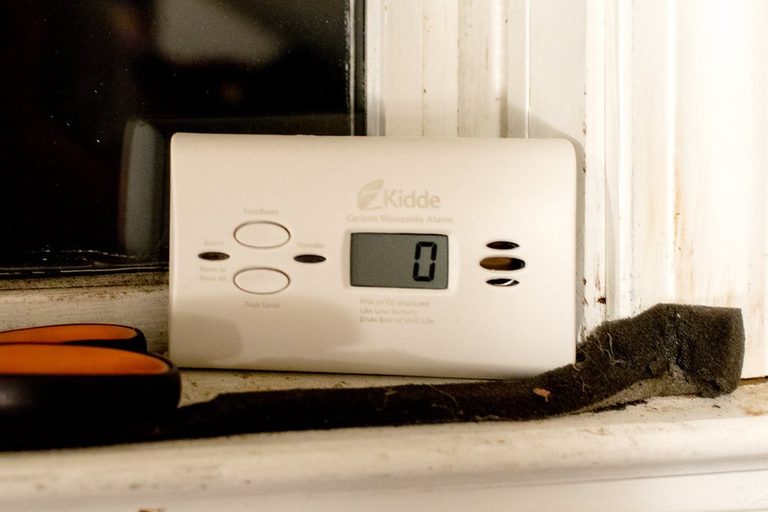
The covered porch is still inside for carbon monoxide
A covered porch counts as indoors for carbon monoxide. Learn the 20-foot rule, safe generator placement, and how to set up CO alarms.
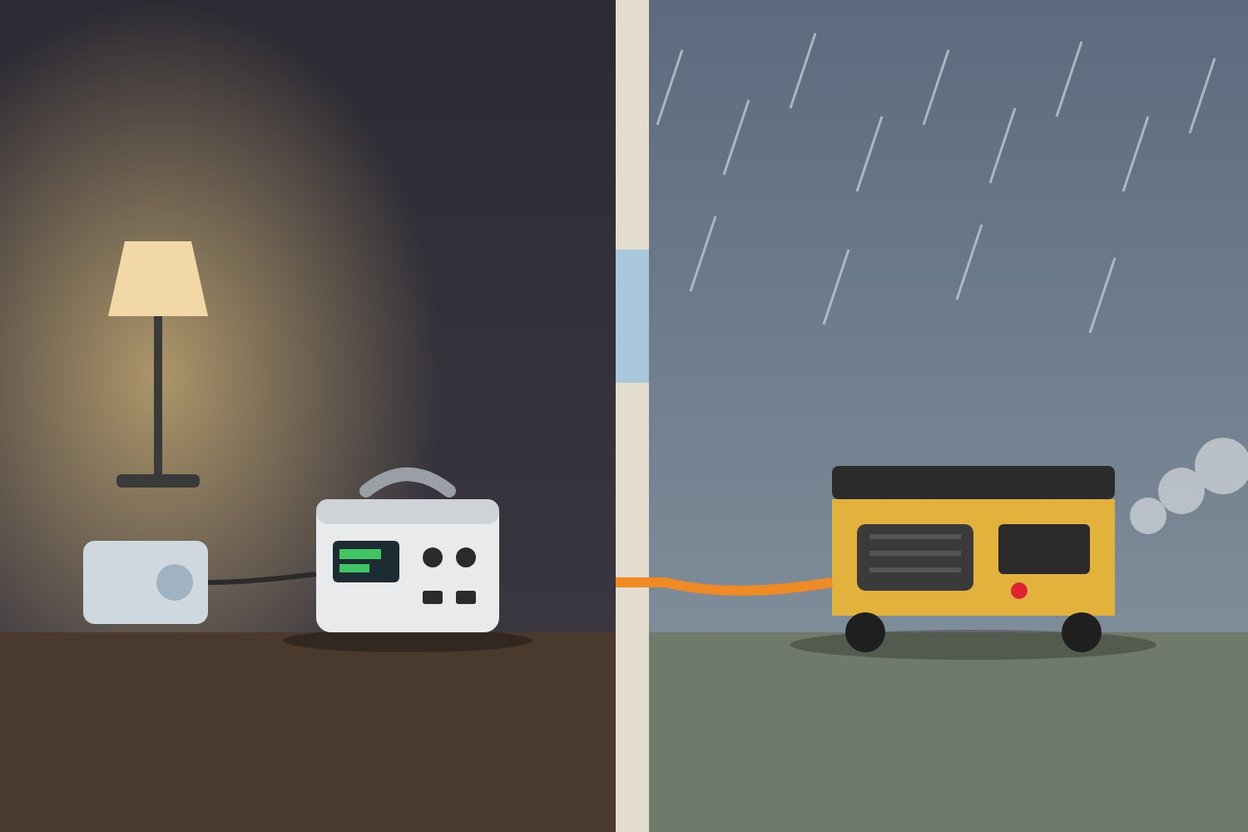
Battery power station or gas generator? What each can actually run, how long, the safety rules, and which makes sense for a Midwest house facing storms and winter outages.
When the lights go out for more than a few hours, every household runs into the same question: what do we plug in, and into what? The two common answers are a portable power station (a big rechargeable battery) and a portable generator (a gas engine). They solve different problems. Here's how to pick.
A power station is a large lithium battery with outlets on the front. You charge it from the wall ahead of time, or from solar panels or your car. When the power goes out, you plug things into it.
What it's good at:
Its limit: capacity. A power station holds a fixed amount of energy, measured in watt-hours (Wh). A 1,000 Wh unit can run a 100-watt load for about 8 to 9 hours after real-world losses. A refrigerator might use 1 to 2 kWh a day, so one fridge can drain a mid-size unit in a day. When it's empty, you need sun, a car, or the grid to refill it.
A portable generator burns gas (some also propane) to make power as long as you keep feeding it fuel.
What it's good at:
Its limits:
In the Midwest, the outages that hurt are long ones: derechos in summer, ice storms and blizzards in winter. August's derecho in northwest Indiana kept some homes dark for two weeks (our write-up).
Make a list of what your house must keep running, roughly in order:
If your list stops at 1 and 6, a power station may be all you need. If it includes the sump pump, furnace or well pump through a multi-day outage, you need a generator, or a large battery system with solar to recharge.
Many prepared households end up with both. The power station runs quiet, indoor loads at night: CPAP, phones, a lamp, the internet router. The generator runs a few hours at a time during the day to keep the fridge cold, run the sump pump, and recharge the power station. That cuts fuel use and lets the house sleep without an engine running.
We'll cover sizing, transfer switches and generator safety in their own posts. Start by writing down your must-run list. It decides everything else.
A covered porch counts as indoors for carbon monoxide. Learn the 20-foot rule, safe generator placement, and how to set up CO alarms.
Check that every floor and sleeping area has a battery-backup CO alarm, placed and tested, before the first winter power outage.
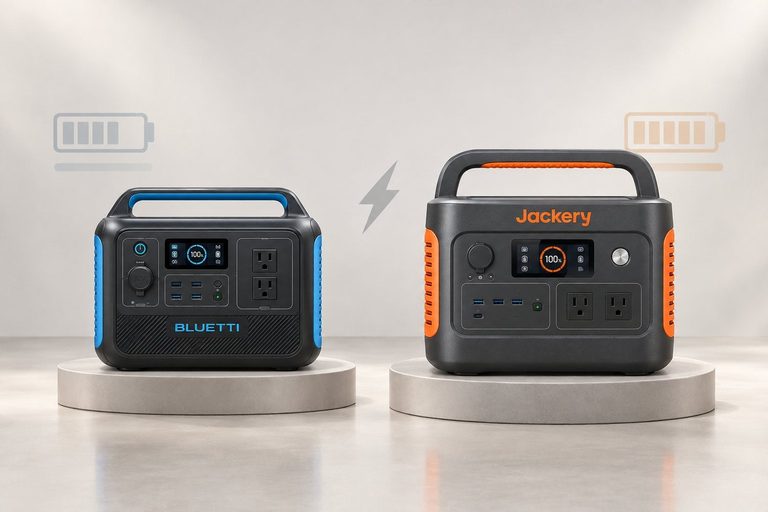
Bluetti Elite 100 vs. Jackery Explorer 1000 compared on runtime, solar charging, and price, with a clear pick for keeping a home running through an outage.