The covered porch is still inside for carbon monoxide
A covered porch counts as indoors for carbon monoxide. Learn the 20-foot rule, safe generator placement, and how to set up CO alarms.
Stock water, no-cook food, light, charging, a 7-day medication supply, fuel, CO alarms, and food-safety tools in October, before a November outage.
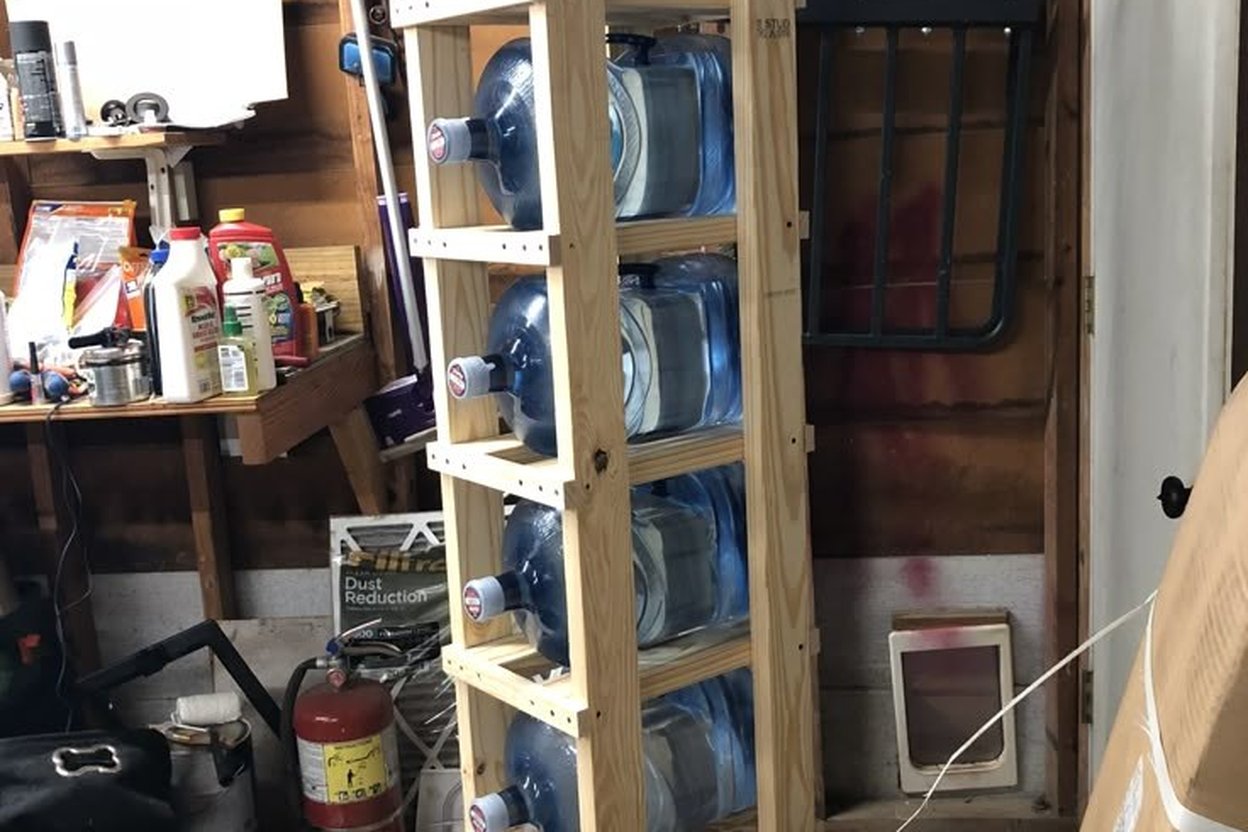
You are checking the forecast, noticing the colder nights, and wondering what would help if the power goes out next month. Buy water and no-cook food, lights and charging gear, a week of medications, heating fuel, safety equipment, and food-safety tools in October. You’ll have time to charge, fuel, and test the essentials before a November storm.
You can start with a practical household supply, then add backup power that matches what you need to run. A short list and a few checks now can make an outage easier to manage.
Put water and no-cook food first, followed by light and charging, a 7-day medication supply, fuel, safety gear, and food-safety tools.
Buy these supplies in October so your lights and power banks are charged, your fuel is fresh, and your equipment is tested before November.
October gives you a chance to prepare before freezes and winter storms complicate heating and supply plans. The first fall freeze in the Midwest usually arrives between mid-September and late October; Chicago’s normal first freeze is October 19, and Indianapolis’s is October 26, according to the National Weather Service’s freeze information.
The NWS warns that heating-fuel deliveries may take days to reach you after a winter storm. Its winter preparation guidance is a useful prompt to check your supplies before severe weather.
NOAA says a strong-to-very strong El Niño is likely through early 2027. El Niño winters often run warmer in the Upper Midwest, though individual seasons vary and snowfall swings widely. A mild-leaning outlook does not guarantee a winter without outages: EIA reports that the average U.S. customer lost power for about 11 hours in 2024, mostly because of major storms.
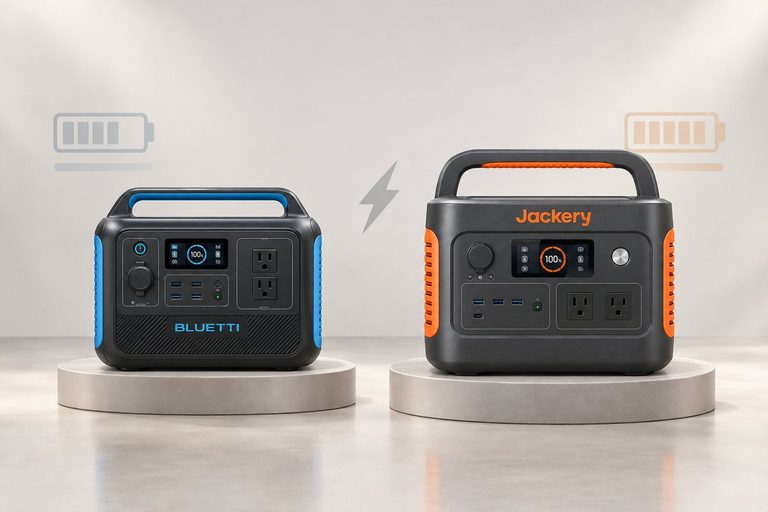
A battery station suits quiet, smaller loads, while a portable generator can supply more continuous power when you can run it safely outdoors. Check both running watts and starting watts before choosing equipment: a fridge uses roughly 130 to 400 watts while running, yet needs about 800 to 1,200 watts to start. Honda and Champion’s generator charts show why startup demand belongs in your sizing calculation.
A furnace blower and a sump pump each use several hundred watts or more. For a documented price comparison, Jackery lists its Explorer 1000 v2 battery station at $589, with 1,070 watt-hours (Wh) and 1,500 watts (W). Honda lists the EU2200i inverter generator at $1,199, with 1,800 W rated output and a CO-MINDER shut-off.
To estimate battery runtime, divide the station’s watt-hours by the appliance’s running watts. That gives a best-case estimate; real runtime is shorter. For example, the calculation for a 130 W fridge is 1,070 Wh ÷ 130 W, but the result is not a guaranteed runtime.
The Jackery should be charged only between 32°F and 113°F, so keep it out of a freezing garage while charging. NFPA’s 2026 Fire Prevention Week message is to charge lithium batteries on a hard surface. Never backfeed a generator into your home wiring; connect one to house wiring only through a transfer switch installed by an electrician.
Fill approved gasoline cans in October, add stabilizer when you fill them, and write the fill date on each can. Gas averages about $4.36 per gallon nationally today, with the Midwest a little lower, so filling a 5-gallon can costs a little over $20.
Manufacturers give different storage timelines for treated gasoline: Champion says up to one year, while STA-BIL and Generac say up to 24 months. Follow your equipment manual and label every can with its fill date. Store fuel outside living areas, and ask your local fire department about storage limits.
If you heat with propane or heating oil, check your tank before the first storm. EIA’s October 5 heating-season prices put residential propane at about $2.60 per gallon nationally and $2.05 in the Midwest. Heating oil is about $6.04 per gallon, roughly $2.49 higher than a year ago. Schedule a refill before a storm affects deliveries.
A generator needs CO protection and a safe operating location: CPSC says portable generators cause nearly 100 carbon monoxide deaths a year. Run a generator outdoors at least 20 feet from your house, and keep it off porches and out of carports, garages, and other enclosed spaces.
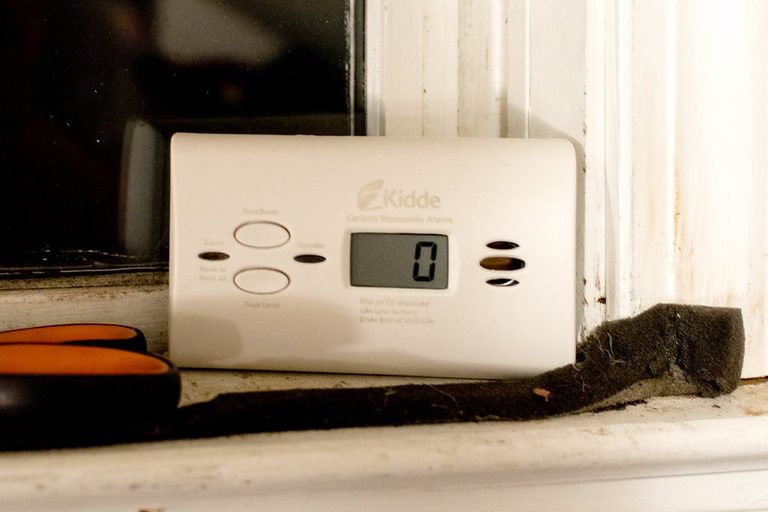
Install battery-powered or battery-backup CO alarms on every level of your home and outside sleeping areas. If you use a space heater, leave at least 3 feet between it and anything that can burn, and plug it directly into a wall outlet.
Never use a gas oven or charcoal grill indoors for heat. Choose flashlights for outage lighting, and check your CO alarms before cold weather arrives.
A full freezer holds food safely for about 48 hours during an outage; a half-full freezer holds it for about 24 hours. A closed refrigerator keeps food safe for about 4 hours.
Use an appliance thermometer in each refrigerator and freezer so you can check temperatures without guessing. Throw out perishables that have been above 40°F for more than 2 hours.
Fill empty freezer space in October so the freezer starts full, and keep a cooler and ice ready for food you need to move.
A covered porch counts as indoors for carbon monoxide. Learn the 20-foot rule, safe generator placement, and how to set up CO alarms.
Check that every floor and sleeping area has a battery-backup CO alarm, placed and tested, before the first winter power outage.
Bluetti Elite 100 vs. Jackery Explorer 1000 compared on runtime, solar charging, and price, with a clear pick for keeping a home running through an outage.