The covered porch is still inside for carbon monoxide
A covered porch counts as indoors for carbon monoxide. Learn the 20-foot rule, safe generator placement, and how to set up CO alarms.
Discover how long food stays safe in a power outage, how to extend that time with a cooler, and exactly what to throw out.
The lights flicker, the furnace goes quiet, and the house goes still. Soon you're standing in the kitchen thinking about the fridge, which is full of groceries, leftovers and maybe a turkey thawing early for Thanksgiving. A refrigerator that was at 40°F or colder keeps food safe for about four hours if the door stays closed. After that, perishable food should be thrown out. The rest of this article covers when a thermometer overrides that clock, how to keep food cold longer, and which foods to keep or throw away.
Federal food-safety guidance from FDA, USDA and CDC agrees on the starting point. A closed refrigerator keeps food safe for up to about four hours during a power outage. After four hours without power, perishable refrigerated food such as meat, poultry, fish, eggs and leftovers should be thrown out.
The four hours assumes the appliances were set correctly before the storm: the refrigerator at 40°F or below and the freezer at 0°F or below. If your fridge usually runs a little warm, you start with less time.
The reason for the limit is the "danger zone," the range between 40°F and 140°F where bacteria grow fastest. USDA says bacteria in that range can double in as little as 20 minutes. Once food has been warm for a while, the numbers add up fast.
You can't smell or taste your way to a safe answer. Federal guidance says plainly never to taste food to decide whether it's safe. Bacteria that make people sick usually don't change how food looks or smells. A pot of chili can seem perfectly fine and still put someone in bed for two days.
The four-hour rule is what to follow when nobody knows the actual temperature inside the fridge. A few things change it.
Opening the door shortens it. Each time the door opens, cold air spills out and the safe window gets shorter. Federal guidance gives no adjusted number of hours for an opened fridge, so the safest habit is to keep the door shut and decide everything at once.
A thermometer can extend it. If an appliance thermometer still reads 40°F or below, the food is still cold enough to keep. That's true even past four hours.
Two hours above 40°F ends it. FDA and USDA say to discard perishable food that has been above 40°F for two hours or more. If you check and the thermometer already reads above 40°F, with no way of knowing when it got there, assume the worst and throw out the perishables.
A packed or newer fridge gets no extra time. Keeping food grouped together helps it hold cold, and a well-stocked fridge stays cold for about four hours. That's the same number as any closed fridge. Some online forums say a modern fridge is fine for 6 to 12 hours, but federal guidance doesn't say so.
If the utility is warning of a long restoration, or ice is still bringing down lines, don't wait for the four hours to run out. With a cooler and ice, you can move refrigerated perishables into the cooler and keep them at 40°F or below. Add ice as it melts, and put a thermometer in the cooler so you're checking a number instead of guessing.
That plan works best when the ice is made ahead of time. CDC and USDA suggest freezing containers of water and gel packs in advance. A few frozen gallon jugs also help the freezer stay cold while the power is out, and once they thaw you have extra drinking water.
For a long outage, dry ice is the heavy-duty option. USDA says 50 pounds of dry ice should keep a full 18-cubic-foot freezer cold for two days. Never touch dry ice with bare hands, and don't let it touch food directly.
In a Midwest winter, it's tempting to set everything outside in a snowbank. USDA says not to. Sunshine can thaw frozen food even on a cold day, outdoor temperatures swing, and animals can get into it. Use the cold a different way: fill containers with water, let them freeze outside, and bring that ice in to the cooler or fridge.
The freezer gives you much more time than the fridge. With the door closed, a full freezer keeps food safe for about 48 hours, and a half-full freezer for about 24 hours. That's one more reason to keep the chest freezer stocked going into storm season, even if part of the space is jugs of water.
The test for frozen food is simple. If a package still has ice crystals, or is at 40°F or below, it can be refrozen or cooked. The texture may suffer, since steaks can turn a bit mushy and vegetables lose some crunch, but the food is safe. Looks and smell still don't prove anything either way.
The details on the FoodSafety.gov frozen-food chart:
This is where most households start arguing. The FoodSafety.gov chart covers refrigerated food that has been above 40°F for more than two hours. Here's how it sorts out.
Throw out:
Usually safe to keep:
Mayonnaise is the exception. Opened mayonnaise, tartar sauce and horseradish only have to be thrown out if they were above 50°F for more than eight hours.
Juice is less clear. The FoodSafety.gov chart says opened fruit juice can stay and opened vegetable juice goes. A separate USDA emergencies page says to discard both after more than four hours without power. If you want to be cautious, throw out both.
One more rule from that USDA page: throw out bread, greens or anything else that raw meat, poultry or fish juices dripped onto.
When the power comes back, read the thermometers before you do anything else. Check the freezer especially, before it has a chance to cool back down and hide how warm it got. A reading of 40°F or below means the frozen food can be refrozen. Without a thermometer, check each package for ice crystals or a temperature of 40°F or below. Even after that, throw out anything with an unusual smell, color or texture.
If you're unsure about a specific item, the USDA Meat and Poultry Hotline is 1-888-674-6854 (or mphotline@usda.gov). It's staffed Monday through Friday, 10 a.m. to 6 p.m. Eastern, with recorded messages 24 hours a day. Live chat runs at ask.usda.gov during the same hours.
Insurance: Many standard homeowners policies cover up to about $500 of food spoiled by an outage caused by a covered peril. Your deductible applies, though, and a loss smaller than the deductible isn't paid. Some insurers sell separate food-spoilage coverage with its own lower deductible. A fridge that simply wears out isn't covered under a standard policy. The Insurance Information Institute also says most electric utilities don't reimburse customers for spoiled food. Your declarations page is the only real answer, so read it before the next storm.
Medicine: The food chart doesn't apply to medicine. Ready.gov says to discard refrigerated medicine after an outage of more than a day unless the label says otherwise, and to ask a doctor or pharmacist for a new supply. If someone in the house depends on insulin or another refrigerated drug, ask the provider now how long it can be stored warmer than the label range.
Fall is a good time to get ready, before ice season starts. A short list:
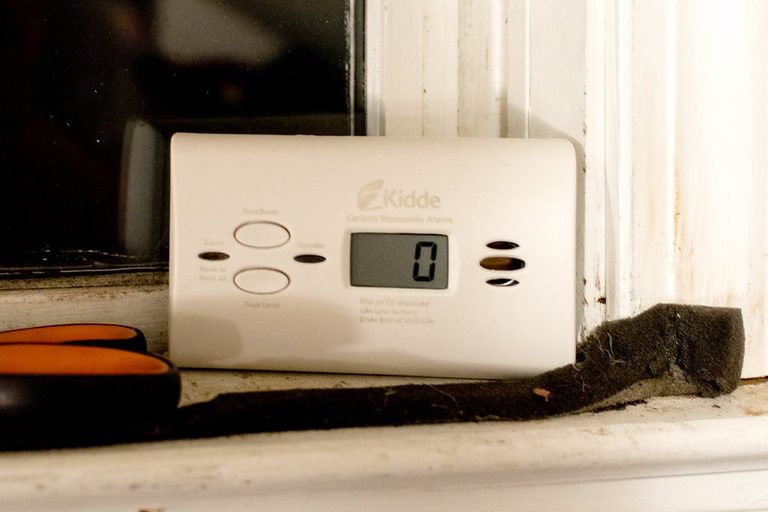
If a portable generator will keep the fridge running, set it outdoors, at least 20 feet from windows, doors and attached garages. Never run it in the house, garage, basement, crawlspace or shed, even with doors and windows open. Install carbon monoxide alarms on every level of the home. In a March 2026 release, CPSC said portable generators cause nearly 100 carbon monoxide deaths a year in the U.S. Also, never use a gas stove or oven to heat the house.
With a thermometer and a cooler ready, you can decide what to keep by checking a temperature instead of guessing.
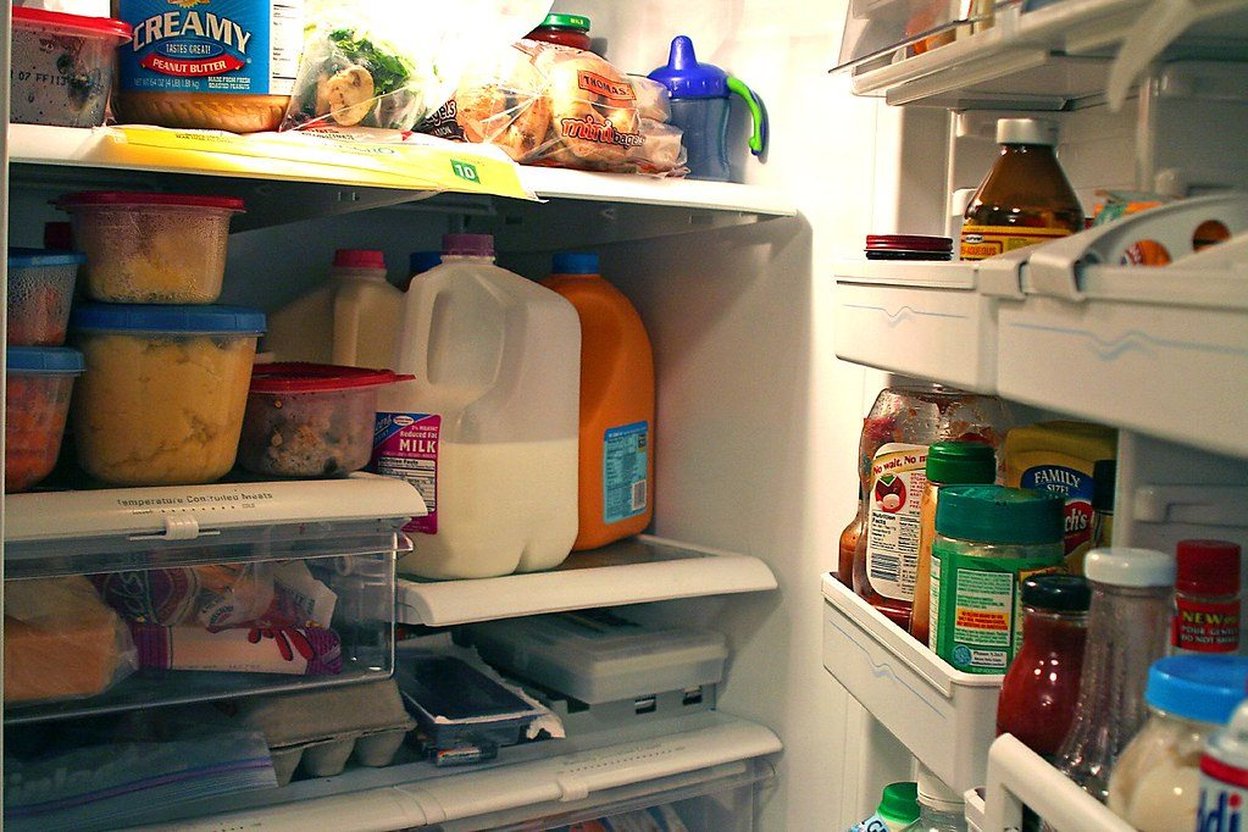
Photo: Introducing....My Fridge by armigeress, BY 2.0.
A covered porch counts as indoors for carbon monoxide. Learn the 20-foot rule, safe generator placement, and how to set up CO alarms.
Check that every floor and sleeping area has a battery-backup CO alarm, placed and tested, before the first winter power outage.
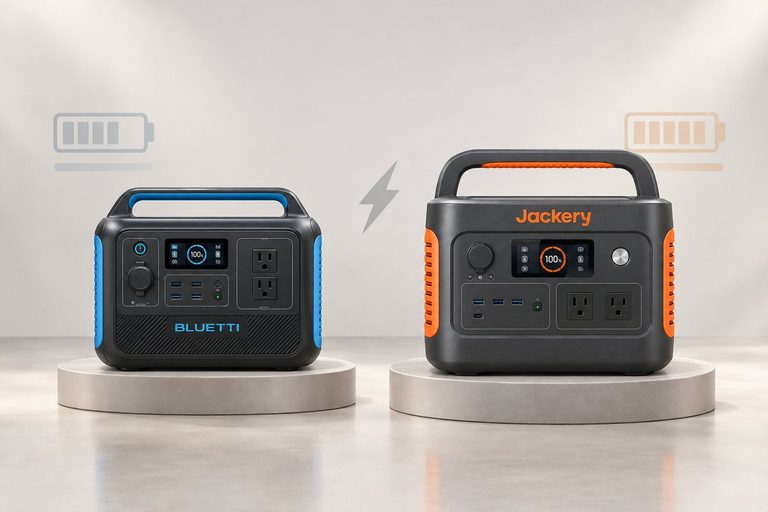
Bluetti Elite 100 vs. Jackery Explorer 1000 compared on runtime, solar charging, and price, with a clear pick for keeping a home running through an outage.