Hose Bib Covers Before the First Hard Freeze
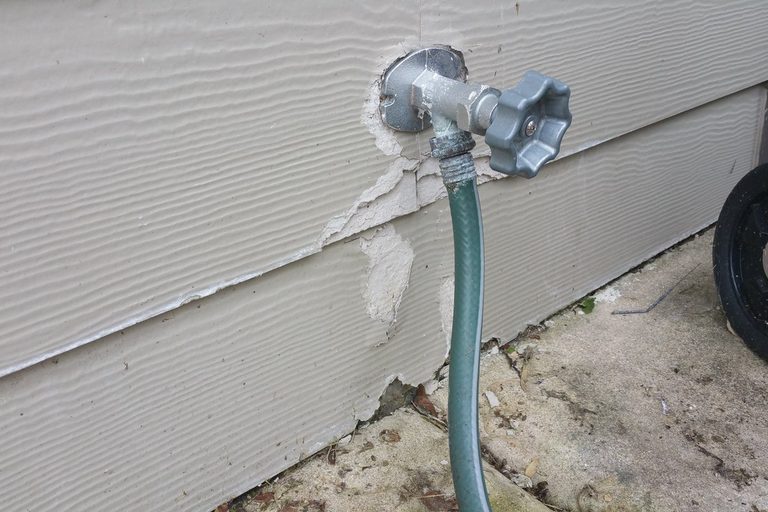
An outside faucet left connected to a hose is one of the most common frozen-pipe leaks. How to shut off and drain outdoor faucets, when a cover helps, and how to check…
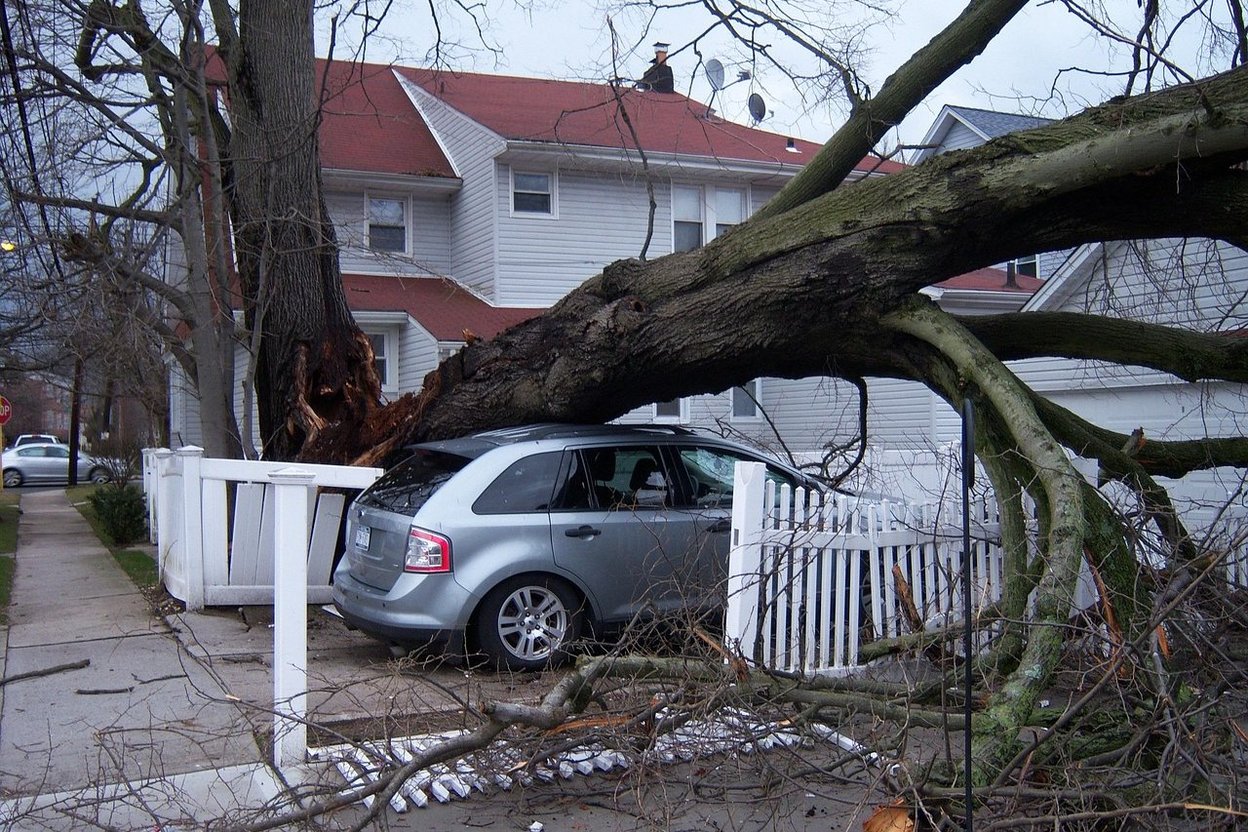
Where to shelter at home, in a car, and outdoors when a severe storm drops trees, plus what to do with power lines and insurance claims afterward.
The sky turns green-gray, your phone buzzes with a severe thunderstorm warning, and the big maple out back starts to roar. Maybe you're on the couch, or maybe you're on the highway trying to get home before it hits. If a tree comes down, where you are matters most. At home, go to the lowest floor, into an inside room away from the windows and from the side of the house facing the big trees. In the car, keep driving to solid shelter if you have time, and stay inside the car if a power line lands on it. Here's how to handle all of it, including the insurance afterward.
Falling trees kill people every year. Most of the victims are in vehicles, outdoors, or at home when a trunk comes through the roof. It doesn't take a tornado. Ordinary thunderstorms and windstorms bring down far more trees.
What to do:
The rest of this article covers why these rules work and what to do once the wind dies down.
According to National Weather Service figures reported by Yahoo News, wind killed 71 people and injured more than 210 in the US in 2023. The 10-year average is 57 wind deaths a year. The NWS doesn't track tree deaths on their own, but where the 2023 victims were tells you a lot: 14 died in vehicles, 9 in permanent homes and 7 in mobile homes.
Hurricanes can make this much worse. The same report says falling trees caused 61 of the 65 wind-related deaths in Hurricane Helene in 2024, citing the National Hurricane Center's final report. That's more than all of 2024's tornadoes, which killed 54.
Older research points the same way. A study of 1995 to 2007 counted roughly 400 US deaths from wind-related tree failures, about 31 a year. Thunderstorms were the biggest single cause, at around 40%. Vehicles were the most common place people died, followed by being outdoors. For Midwest families, everyday summer and fall storms are the bigger risk, not just the rare big tornado.
Weather in the days before a storm matters too. When the ground is soaked, roots hold poorly, so it takes less wind to tip a tree over. Ice adds heavy weight to branches. Look out for dead trees, trees with dead tops or big dead limbs, and trees leaning toward the house.
Plenty of people take tornado warnings seriously and ignore severe thunderstorm warnings. Since thunderstorms bring down the most trees, it makes sense to treat both warnings the same way. The NWS advice is to go to your safe spot as soon as the warning is issued, and to bring pets if you have time.
The best spot is the basement. Without a basement, use an inside room on the lowest floor, such as a hallway, bathroom or closet, with as many walls as possible between you and the outside. Stay away from windows. Wind and hail can break the glass, and so can a falling limb.
The extra step for tree safety is knowing which trees could reach your house. Walk around the yard on a calm day, maybe this fall while you're raking. Picture each large tree falling toward the house and note which rooms it could hit. If the big oak would land on the kids' bedroom, that room is a bad place to shelter. The danger can be real: near Brevard, North Carolina, brothers aged 11 and 13 died when an uprooted tree crashed into their home during an early-morning storm.
Many bad storms hit at night, so set up a way to get woken up:
If a storm is coming and you're on the road, the NWS says to drive to the nearest secure shelter if there's time. A gas station's building, a store or a public building is far better than staying in your car.
If you can't reach shelter, stay in the car. The NWS says being in a vehicle during a severe thunderstorm is safer than being outside. Try to pull over away from big trees and power lines. Don't stop under a highway overpass. An NWS Norman paper calls overpasses "at best, questionable shelter." The wind there can be stronger, you become "a stationary target for flying debris," and cars stopped underneath can block the road for other drivers and for emergency vehicles.
If you're on foot, at a ball field or in the yard, get indoors. A tree is never shelter.
If a power line falls on your car:
The ground around a downed line can be live up to about 35 feet away, and some utilities say 30. Farther is always better. Warn other people to stay back, and don't try to help someone who's touching the line.
Once the wind dies down, your first job is people, not the house. Get everyone out of the damaged area and away from the building if anything seems unstable.
Call 911 or the utility right away for:
Don't go near wires, and don't walk through water to reach the breaker box. If a tree has pulled the service line off the house or brought down lines in the yard, the utility needs to handle it. Wait until the area is safe before looking at the damage or touching any debris.
Then document everything. Before anything gets moved, photograph and video the damage from several angles, inside and out: the tree, the roof, the ceilings, wet floors and damaged belongings. These photos are the strongest evidence for your claim.
Prevent more damage. Your policy expects you to take reasonable steps to stop things from getting worse. Cover holes in the roof with a tarp, board up broken windows, and keep every receipt for tarps, plywood and emergency labor. Clear only small debris yourself. Cutting into a big trunk resting on a roof is dangerous because the weight can shift without warning. A licensed, insured crew should do that.
Call your insurer as soon as you can. Many companies take claims around the clock after big storms.
Hire carefully. After a storm, out-of-town crews show up quickly, and not all of them are honest. Hire licensed, bonded and insured contractors, get more than one quote, and be wary of anyone who knocks on your door offering to start right now. Ask for a certificate of insurance before anyone climbs onto your roof.
If the power is out for a while, the usual outage rules apply. Run a generator only outdoors, far from windows and doors, and never plug it into a wall outlet. If you want to power the house, have a licensed electrician install a transfer switch so you don't send power back into lines that utility crews are working on.
What's usually covered: Damage from a tree falling on your house or another insured structure, such as a detached garage or fence, is often covered by homeowners insurance. That's usually true even when the tree belonged to your neighbor. Your own policy normally pays. The neighbor's insurer usually only comes in if the tree was known to be dead or dangerous and they didn't deal with it.
Removing the tree: Many policies pay $500 to $1,000 for tree removal, and the limit often applies per storm rather than per tree. Wording varies by company and state, so read the "debris removal" section of your own policy now, before you need it.
What's usually not covered:
Rough costs: One Georgia tree service estimates $1,500 to $5,000 or more to remove a large tree from a roof, and $800 to $2,000 for a medium tree across a driveway or fence. Prices vary by region and go up after big storms, when every crew is booked.
Before the next storm, this fall:
Ice season is close, and many families will be on the road for Thanksgiving. A little work in the yard now and a plan everyone knows can keep a falling tree from becoming a tragedy.
Photo by reslmaier on Pixabay.
An outside faucet left connected to a hose is one of the most common frozen-pipe leaks. How to shut off and drain outdoor faucets, when a cover helps, and how to check…
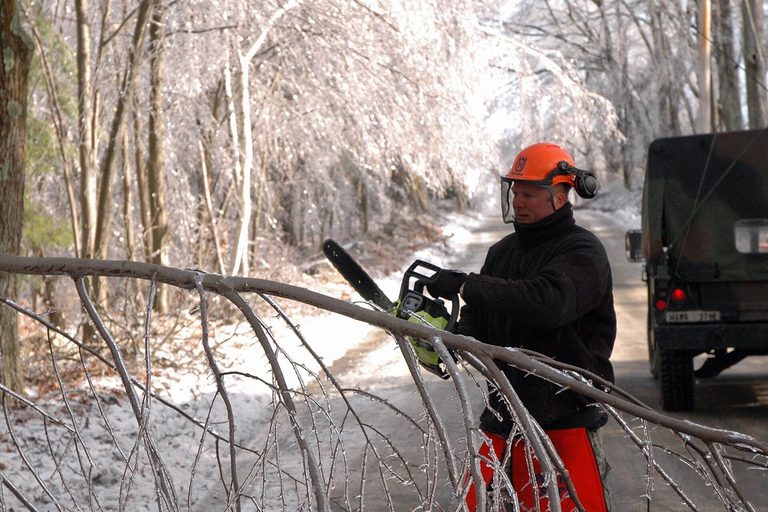
Ice storms bring down trees and power lines across whole regions, and outages can last days. How to prepare the house, the yard and the family before freezing rain, and what to…
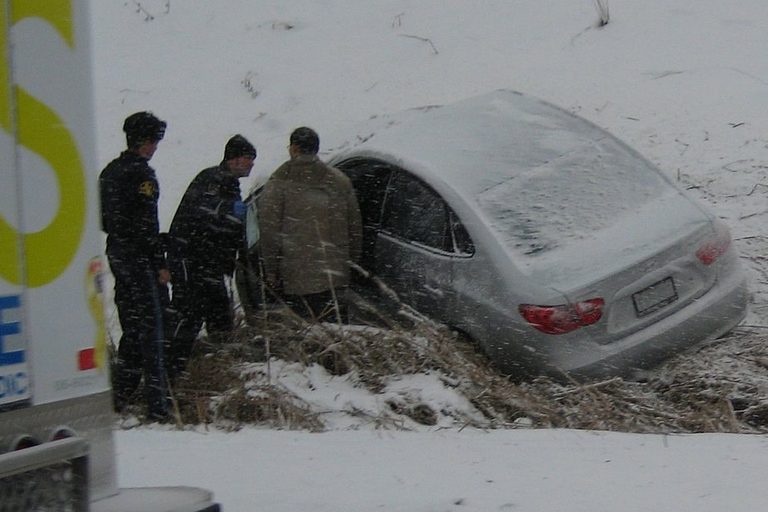
A Midwest winter can strand you on a highway for hours. What belongs in a winter car kit, why each item matters, and what to do if you get stuck.