Emergency Cash: How Much and Where to Keep It
How much emergency cash to keep for an outage, why small bills matter, where to store it at home, and what FDIC insurance does and doesn't cover.
A weather radio wakes you up at 3 a.m. when a tornado warning is issued, even if your phone is dead or the cell network is down. How they work, how to program your county, and what to buy.
Phones are great for alerts until the battery dies, the cell towers go down, or you sleep through a notification. A NOAA Weather Radio is a cheap backup that can wake you up in the middle of the night when a tornado or severe storm warning is issued for your county.
NOAA Weather Radio All Hazards is a nationwide network of radio stations run by the National Weather Service. It broadcasts weather information 24 hours a day, plus warnings for severe weather and other hazards. It's free.
Weather radios receive these broadcasts on special frequencies that ordinary AM/FM radios can't pick up.
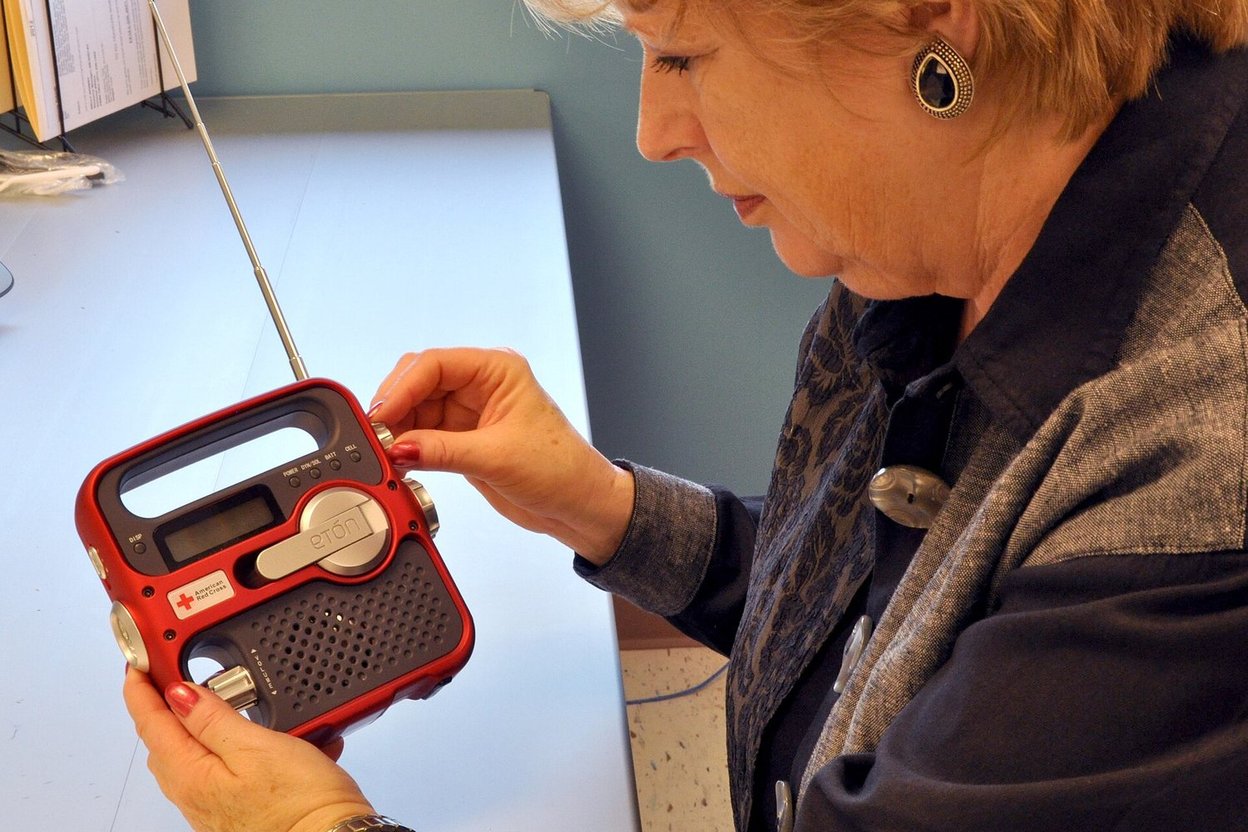
Portable emergency radios often include NOAA weather bands, AM/FM, a hand crank, a small solar panel, a flashlight and a USB port for charging a phone. These are great for a go-bag or a long outage. Some don't have the automatic SAME alarm, so a home tabletop radio is still the best for overnight warnings.
A warning is only useful if you know what to do. Know where you'll shelter in a tornado (lowest floor, interior room, away from windows) and practice with the family. See 72-hour kit checklist and Midwest power outages.
A weather radio costs about as much as a tank of gas and can save your family's life. Every Midwest home should have one.
Photo: Emergency Planning and Security ^ Severe Storm ^ Tornado - Frankfort, Ky. , Marc by Department of Homeland Security. Federal Emergency Management Agency. Public Aff, Public domain.
How much emergency cash to keep for an outage, why small bills matter, where to store it at home, and what FDIC insurance does and doesn't cover.
When the lights go out, the first question is how long. Your electric company's outage map is the best answer you'll get. How to find it, sign up for alerts, and report…
After a fire or storm, you'll be asked to list everything you lost. A 20-minute walk-through video now makes the claim faster and the payout fairer. How to do it right, and…