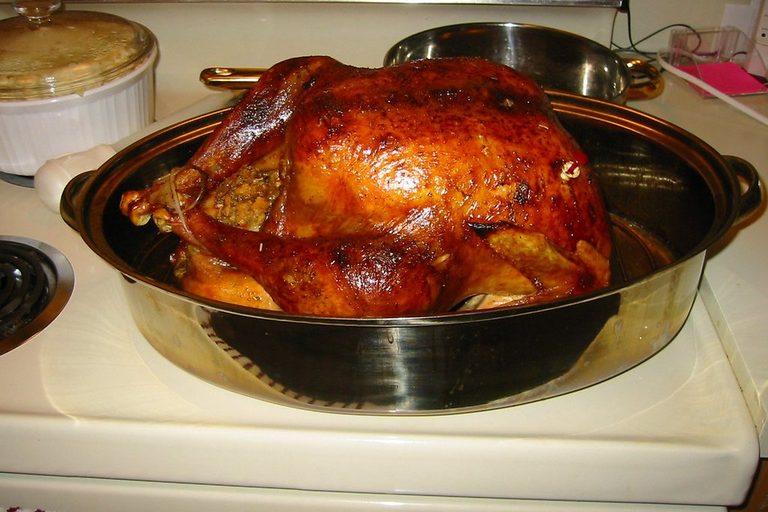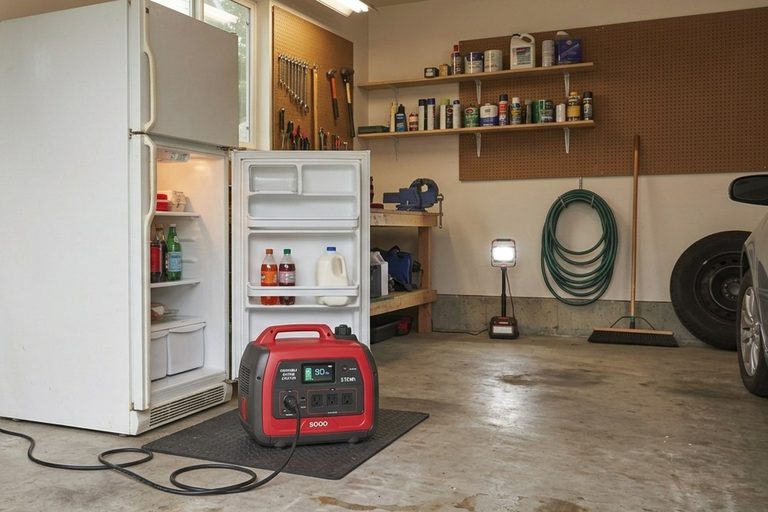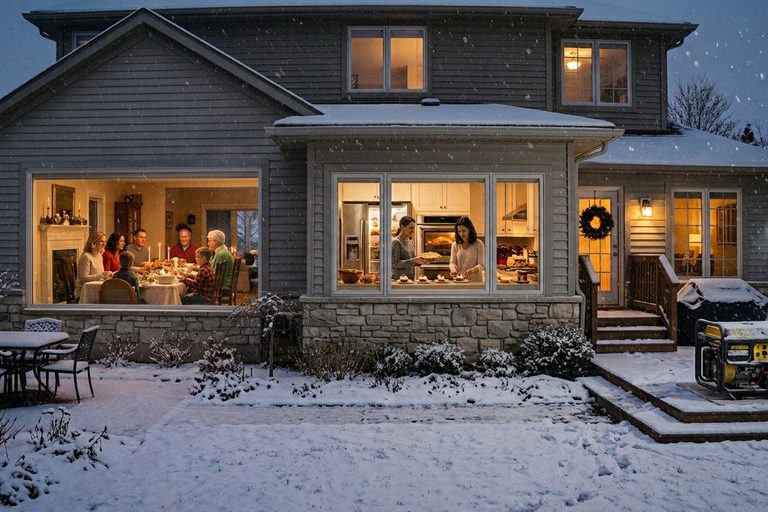
Will a Generator Run the Oven, Fridge and Slow Cookers on Thanksgiving?
Most portable generators can run the fridge and slow cookers but not the oven. Here's how to plan a full Thanksgiving meal during an outage.
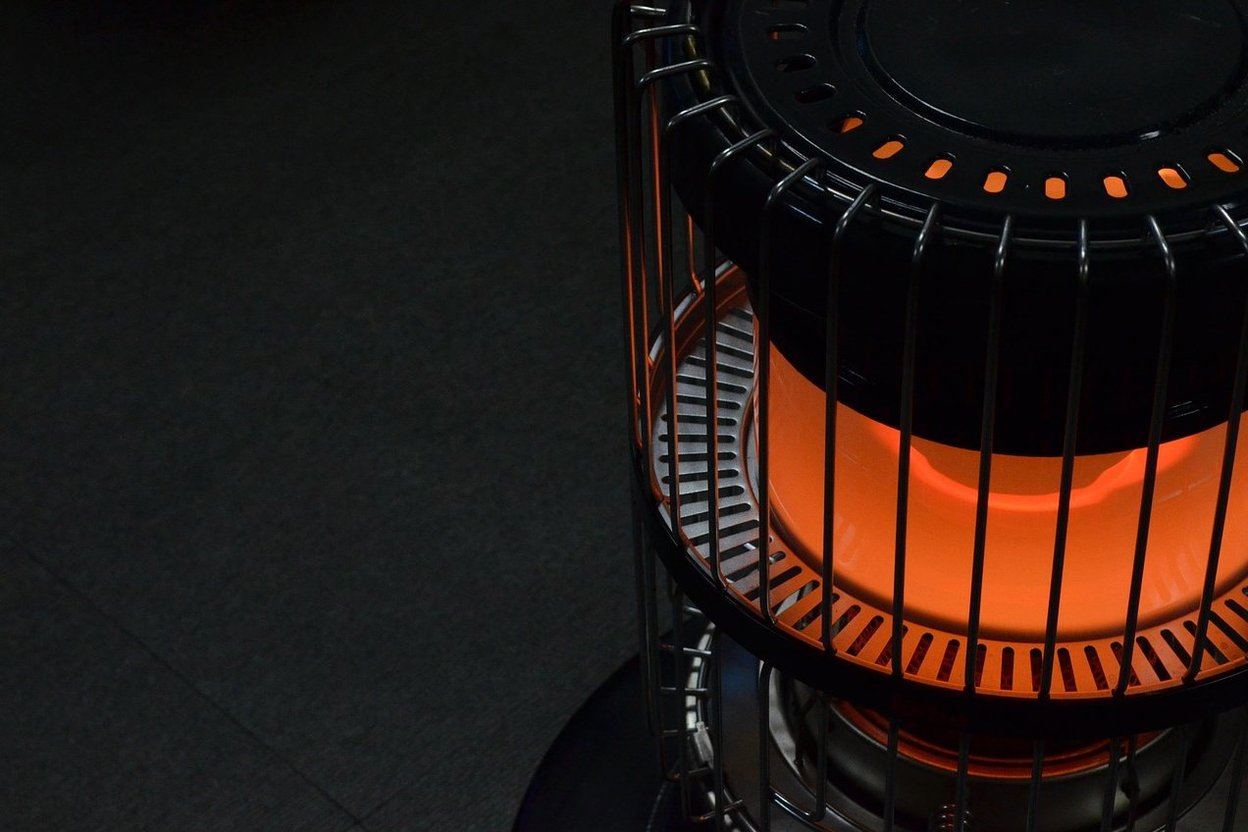
Can you run a kerosene heater indoors during a power outage? Learn the CO and fire rules, fuel safety, state laws, and when to skip it.
The ice storm brought the lines down a couple of hours ago. The furnace has gone quiet, the house is getting colder, and you have a kerosene heater in the garage. Can you safely bring it inside? A modern heater rated for indoor use can be run safely enough, but only if you follow the rules every time. Kerosene heat comes with two risks, carbon monoxide and fire. You can manage both, and this guide covers how. It's a good thing to sort out this fall, before the first real cold snap.
Most states allow the sale of portable kerosene heaters made for indoor use, and lots of families keep one for long winter outages. Being legal doesn't make them harmless. The U.S. Consumer Product Safety Commission (CPSC) warns that misusing one can start a fire you can't control. It can also foul your indoor air badly enough to cause health problems.
Carbon monoxide (CO) is the bigger hidden danger. You can't see it or smell it, and every fuel-burning device makes it. The CDC says it kills more than 500 Americans every year. A kerosene heater burns fuel inside your living space, so it belongs on that list.
That's why two rules never bend:
A third rule comes from the second. Never let a kerosene heater run in a closed-up room while people sleep. Turn it off before bed.
Finally, the law matters too. A few states ban or restrict these heaters, so check yours before you count on one.
Kerosene heater rules differ from place to place. Look up yours before an outage, not during one.
Laws change, and many cities and counties layer their own fire codes on top of state rules. The surest way to know is to call your local fire marshal or the fire department's non-emergency line and ask if a portable kerosene heater is allowed in your home. Renters should read the lease, since many prohibit them. Homeowners should ask their insurance agent whether a kerosene heater affects coverage.
Once you know you're allowed to use one, the next step is fuel. Bad fuel is behind many of the scariest kerosene heater stories.
Burn only water-clear 1-K kerosene. The CPSC says it should look as clear as water. Don't use dyed fuel, yellowed fuel, or a cheaper grade a station is trying to get rid of. Lower grades can release more pollutants into your air.
Never use gasoline, and don't let any mix in. The CPSC warns that even a small amount of gasoline or another volatile fuel in kerosene can sharply raise the chance of fire or explosion. Gasoline contamination is the classic cause of heater flare-ups. Warnings about it date back to 1982, when the CPSC and the National Kerosene Heater Association put out a joint alert.
Most contamination happens through the container or the pump, so a few habits keep you safe:
Check for a recall. In spring 2026, Alliance Chemical recalled 1-K kerosene containers sold from January 2023 through March 2026 (CPSC recall #26-445). The containers lacked flame mitigation devices and child-resistant closures. If you bought kerosene from them during that time, see the company's recall page.
Ask a local dealer for current prices. Kerosene prices vary a lot by region and season.
Once you have good fuel, the daily routine is where safety is won or lost.
Give it air. The CPSC says to run the heater with room doors open. Maine's emergency management agency adds the option of opening a window at least 1 inch. Yes, that lets in some cold air. That's the cost of burning fuel indoors.
Give it space. Keep the heater at least 3 feet from furniture, curtains, bedding, and clothing. Don't use it to dry wet gloves or socks. Set it on a level, solid surface where nobody will trip over it.
Refuel outdoors, every time. The CPSC rules are simple:
Refueling outside in the cold isn't pleasant. Pick a time to do it, like late afternoon, so you aren't doing it half-asleep at midnight.
Look after the wick. Run the heater at the flame height the manufacturer recommends, and never below the minimum wick-stop setting. Keep the wick and the heater clean. A dirty or badly adjusted wick burns poorly, and poor burning means more fumes.
Turn it off before bed. Once the heater is off, the bedroom temperature is up to the blankets.
Protect kids and pets. The heater's surfaces get hot enough to burn. Never run it with the protective grille off, and keep children and pets away. Make it a house rule that nobody plays near the heater.
A flare-up means flames climbing above the heater's normal burn. It's usually a sign of contaminated fuel or a problem with the wick. If it happens:
Teach the older members of your household these three steps before winter, not during an emergency.
Ventilation lowers your CO risk, and alarms catch what ventilation misses. Since your heat source is running without electricity, your alarms need to work without it too.
CO alarms: Maine's emergency agency recommends battery-powered or battery-backup CO alarms, one outside each sleeping area. Look for the UL mark and the words "Single Station Carbon Monoxide Alarm" on the package. If your alarms are hardwired with no battery backup, they stop protecting you when the grid goes down. Here's how to test your CO alarms before the first cold night.
Smoke alarms: The CPSC says to put smoke alarms on every level of the home, outside sleeping areas, and inside bedrooms. Fall is a good time to test them and put in fresh batteries.
Know the symptoms. Mild CO poisoning can cause headache, nausea, dizziness, trouble concentrating, vomiting, drowsiness, and poor coordination. It's easy to mistake for the flu, but there's no fever. Take it seriously if several people in the house feel sick at once, and if they feel better after they leave. Drowsiness is the dangerous part, because someone who dozes off keeps breathing the gas.
If you suspect CO, turn off the heater, get everyone outside into fresh air, and call 911. For advice, call Poison Control at 1-800-222-1222, open day and night.
Other outage habits can cause CO poisoning too. The CDC says never to heat your home with a gas oven, and never to run generators, grills, or other fuel-burning equipment indoors, in an attached garage, or near doors, windows, or vents. Keep a portable generator outside, at least 20 feet from the house by CDC guidance. Never put one in a basement or garage.
So is it worth it? Consider a common model, the Dyna-Glo WK95C8C, a convection heater rated at roughly 23,000 to 23,800 BTU. It holds 1.9 gallons of 1-K kerosene, runs about 8 to 12 hours per tank, and is rated to heat up to 1,000 square feet. One retailer lists it at $149.99, though stock comes and goes, so plan on spending around $150 to $160.
Doing the math on those numbers, it burns roughly 1.5 to 2.5 gallons a day if you run it most of your waking hours. That's an estimate, but it shows that a multi-day outage means storing several gallons, safely, in those blue cans.
A kerosene heater isn't the only answer, and for some homes it isn't the best one. Other options:
A kerosene heater can carry a household through a long winter outage. It earns its place only when you treat it with respect: legal where you live, clear 1-K fuel, fresh air, 3 feet of space, refueling outdoors, a working battery CO alarm, and the heater off at bedtime. Get it all lined up this fall, and an ice storm becomes an inconvenience instead of an emergency.
Photo by Hyeyoung-Jung on Pixabay.
Most portable generators can run the fridge and slow cookers but not the oven. Here's how to plan a full Thanksgiving meal during an outage.
Power died with the turkey in the oven? Check its temperature, move it to a hot outdoor grill fast, and finish it safely.
Learn how to calculate how long a 1,000, 2,000 or 3,600 Wh power station will run your fridge, with a simple formula and food-safety limits.