Will a Generator Run the Oven, Fridge and Slow Cookers on Thanksgiving?
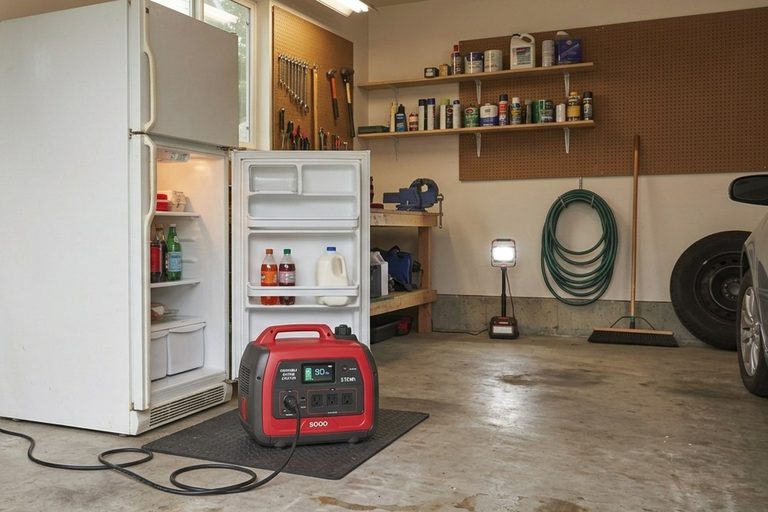
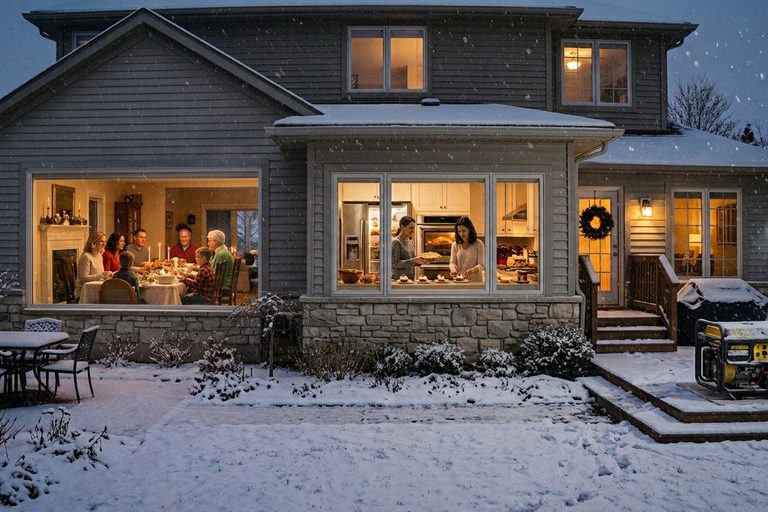
Most portable generators can run the fridge and slow cookers but not the oven. Here's how to plan a full Thanksgiving meal during an outage.
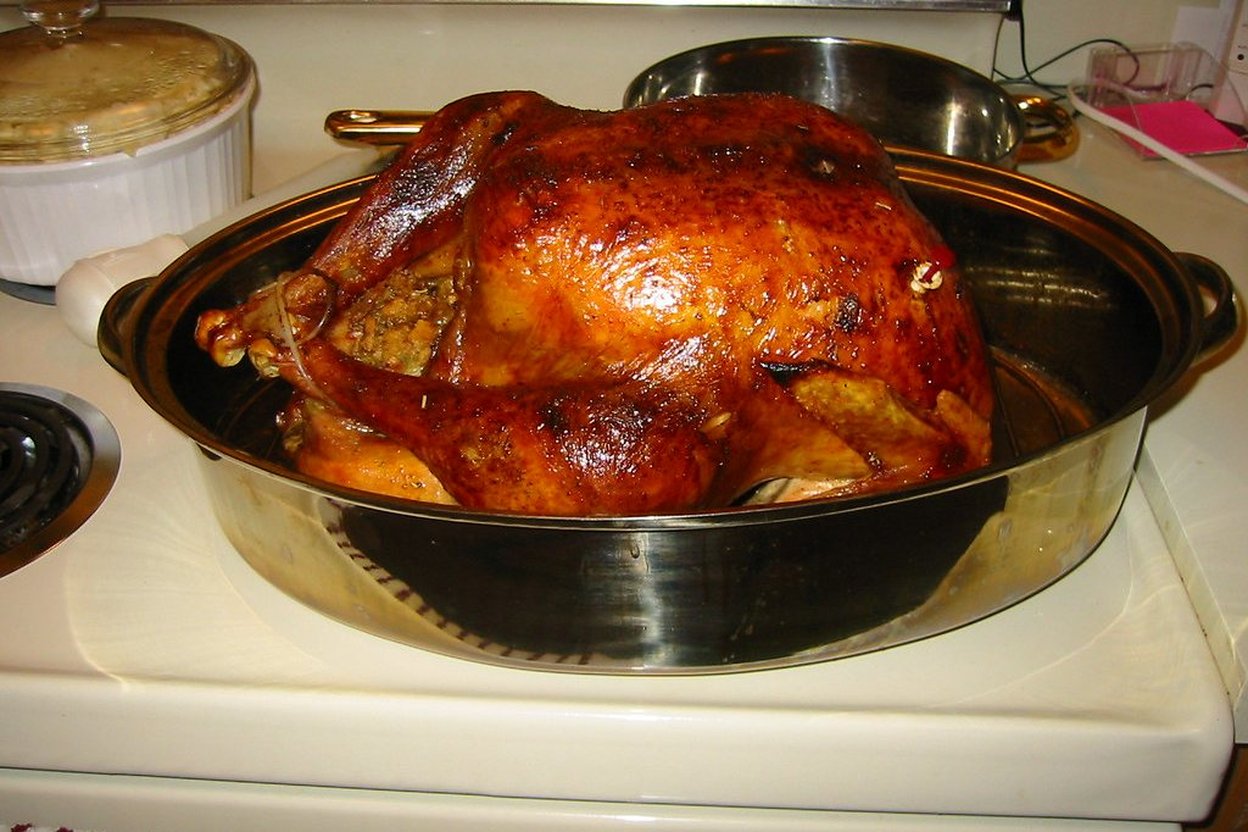
Power died with the turkey in the oven? Check its temperature, move it to a hot outdoor grill fast, and finish it safely.
The house smells like Thanksgiving and the turkey has been in for two hours. Then the lights flicker and go out, and the oven goes quiet. Don't panic, and don't leave the bird sitting there. Check its temperature, get it onto a hot outdoor grill quickly, and cook it until it's done. If you can't get heat on it soon, cut it into pieces and finish them on the stovetop or grill. Whatever you do, don't let a half-cooked turkey sit around waiting for the power to come back.
Keep the oven door shut while you work out what happened. A closed oven holds its heat for a while, and every time you open it, heat escapes. Check the breaker panel and look out the window. If the whole street is dark, assume the power will be out for a while.
Take the turkey's temperature. Push a probe thermometer into the thickest part of the inner thigh. That number tells you how far along the bird is. Next, think about how long it has been cooking. At 325°F, the Minnesota Department of Health lists roughly 3 to 3¾ hours for an unstuffed 12–14 lb bird and 3¾ to 4¼ hours for 14–18 lb. If yours had two hours in, it's probably a little over halfway.
Move it to the grill quickly. USDA's guidance is to move the turkey right away to an outdoor cooking appliance and keep cooking until it's safely done. A USDA Meat and Poultry Hotline expert told ABC News you have "about 30 minutes to get it to a new cooking location before bacteria starts to grow." Use that as a rule of thumb, not a precise deadline. The point is to keep the turkey hot.
Don't put it in the fridge to finish later. Federal food safety guidance says never to partly cook meat or poultry and refrigerate it to finish another time, because any bacteria present haven't been killed yet. The only safe partial cook is one that goes straight onto hot heat.
If the grill won't work, or the oven has been dead a long time: carve the bird into legs, thighs, wings and breast halves. Finish the pieces in covered pans on the stovetop (see the gas burner section below) or on the grill, because smaller pieces cook much faster than a whole bird. If the turkey has sat warm with no heat for close to two hours, the general 2-hour rule for perishable food says throw it out. A ruined dinner costs less than a stomach bug that goes through the whole family.
Set up the grill for indirect heat. On a gas grill, light the outside burners and leave the middle one off. On a charcoal grill, bank the coals on both sides. Then set the turkey in its roasting pan or on a drip pan in the middle, away from direct flame, and close the lid. Preheat first so the bird goes onto a hot grill.
How long it takes. Weber's times for a whole turkey on the grill:
Add about 3 minutes per pound when it's cold out, which in late November it often is. A rough estimate: a 14-lb bird at 350°F would take about 2½ to 3 hours from raw, so one that's halfway done might need around an hour and a half more. That's only an estimate, so go by the thermometer, not the clock.
When it's done. Weber, like federal guidance, calls a turkey done at 165°F in the innermost part of the thigh. The Minnesota Department of Health is more cautious and says 180°F in the thigh and 170°F in the breast, with the center of any stuffing at 165°F or more. Treat 165°F in the thickest part as the minimum. Some cooks like the thigh higher for texture.
Let it rest. Minnesota's guidance is to let the turkey stand 20 minutes before carving.
Carbon monoxide rules, every time:
Gas ranges. If you cook with gas, you may think you're covered. Usually you're only partly covered. Wolf says its surface burners can be lit by hand with a match or lighter during an outage, but warns: "Do not attempt to manually light ovens, griddles, French tops, and charbroilers without power." Many newer gas ovens use an electric igniter and won't light without power. Check your owner's manual now so you know before the holiday. If your burners can be lit by hand, they're a good way to finish cut-up turkey pieces and keep side dishes going.
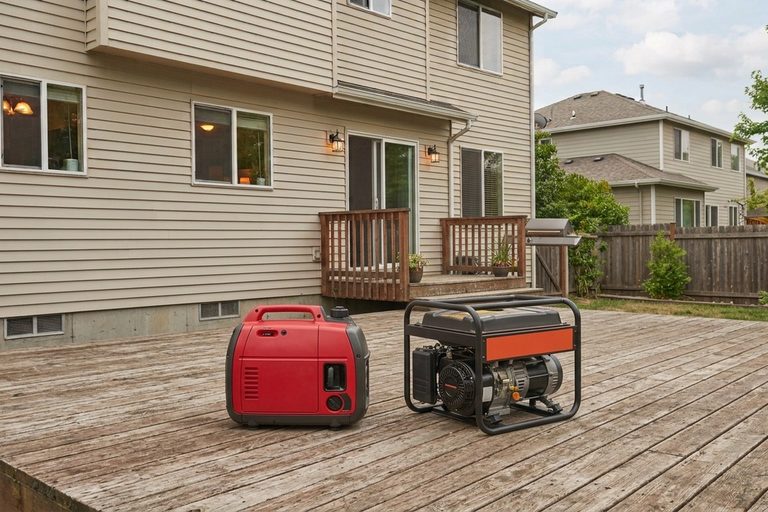
Electric oven on a generator. An electric oven draws about 2,150 watts, and in the US it runs on a 240-volt circuit. Many portable power stations only put out 120 volts. So even a unit with enough watts may not be able to run your oven at all. Running a range from a portable generator means connecting through a transfer switch or interlock installed by a licensed electrician. Never plug a generator into a wall outlet ("backfeeding"), because it can kill a lineworker or a neighbor. CPSC says to run portable generators outdoors, at least 20 feet from the house, with the exhaust pointed away from any building.
On Thanksgiving Day, firing up the grill is usually much faster than any generator setup.
The fridge: if the door stays shut, it keeps food safe for up to 4 hours without power. After that, CDC says to throw out refrigerated meat, fish, eggs, milk and leftovers. Never taste food to check whether it's still good. When in doubt, throw it out.
The freezer: a full freezer holds about 48 hours and a half-full one about 24, if the door stays closed. Keep an appliance thermometer in each so you know where you stand: 40°F or below in the fridge, 0°F or below in the freezer. If the outage looks like it will last a long time, dry ice helps. Clemson suggests about 3 lb per cubic foot, and handle it with gloves.
The table: cooked turkey, stuffing and gravy shouldn't sit at room temperature more than 2 hours, or 1 hour above 90°F. Reheat leftovers to 165°F and eat refrigerated leftovers within 3 to 4 days.
Side dishes: outdoors, a two-burner camp stove can handle potatoes, gravy and green beans while the turkey takes up the grill. Foil pans of stuffing or sweet potatoes can go on the grill beside the bird on the indirect side. Sides that are already cooked can be served at room temperature well within the 2-hour window.
Thanksgiving is November 26, which gives you a few weeks to get ready. Late-fall storms can bring ice and wind just in time for the holiday.
Prepare once, and a power cut halfway through the roast becomes a story you tell at the table instead of a ruined dinner.
Most portable generators can run the fridge and slow cookers but not the oven. Here's how to plan a full Thanksgiving meal during an outage.
Learn how to calculate how long a 1,000, 2,000 or 3,600 Wh power station will run your fridge, with a simple formula and food-safety limits.
Compare inverter and conventional generators on noise, power quality, fuel use, cost and 240V needs, so you can pick the right one for your house.