Power Out With the Turkey in the Oven? Your First 10 Minutes and How to Finish the Bird
Power died with the turkey in the oven? Check its temperature, move it to a hot outdoor grill fast, and finish it safely.
Most portable generators can run the fridge and slow cookers but not the oven. Here's how to plan a full Thanksgiving meal during an outage.
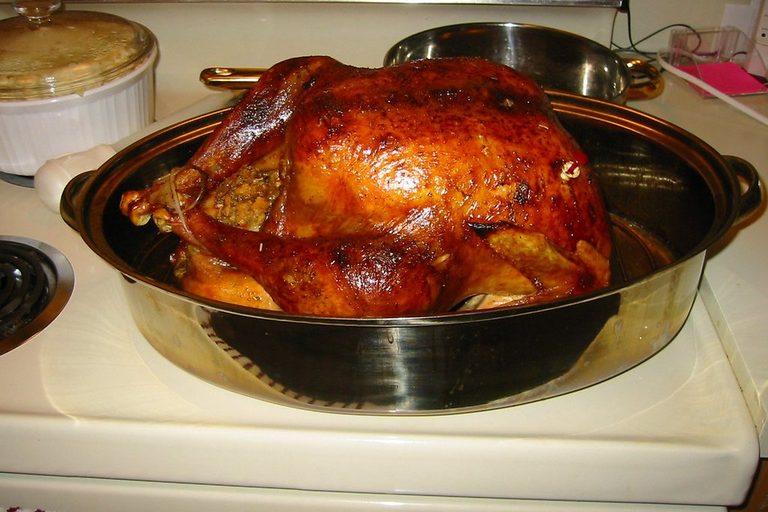
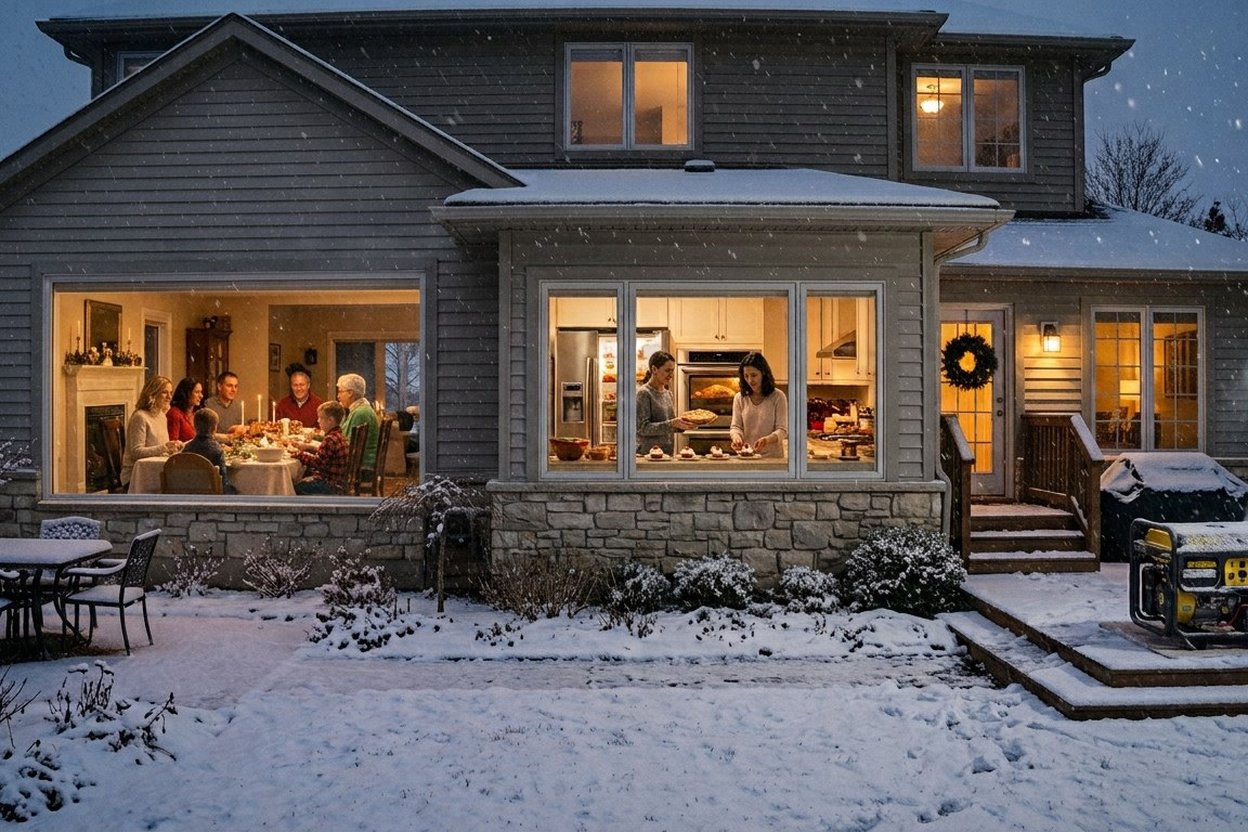
The turkey has been thawing in the fridge since Sunday, the pies are done, and on Wednesday night a late-November ice storm takes the power out. If a generator is sitting in the garage, the answer is mostly good news. Almost any small portable generator can keep the fridge cold and the slow cookers going. The electric oven is the hard part, and most plug-in generators can't run it. Below is what each appliance needs, why the oven is different, and how to plan the meal so dinner still happens.
The refrigerator and slow cookers are easy loads. The electric range is not. A standard range is a 240-volt appliance, and its oven alone draws roughly 2,000 to 5,000 watts while it heats. Most portable generators can't power a 240-volt range through an extension cord. Here is what each size of generator can realistically do:
Most households with a mid-size portable fall in the first two groups. The rest of this article explains how to cook a full meal there.
Generators carry two ratings. Running watts is what the generator can supply steadily. Starting watts (also called surge or peak watts) is the short extra burst it can supply when a motor kicks on. A refrigerator compressor needs that burst every time it cycles on. Heating appliances like slow cookers and roasters don't.
Typical figures from generator sizing charts and appliance listings:
To size a load, add the starting watts of the largest motor to the running watts of everything else. A worked example:
Once the compressor is running, that same setup drops to about 1,500 running watts. You need a generator whose running rating covers the steady load and whose starting rating covers the surge.
All of these numbers are general averages. Check the nameplate sticker on each appliance, usually found inside the fridge door, under a slow cooker's base or on the back of a roaster. Use those figures instead.
A kitchen range doesn't plug into an ordinary outlet. It runs on its own 240-volt circuit, usually 40 or 50 amps. A 50-amp circuit at 240 volts works out to about 12,000 watts. With the oven and every burner on high, a range can draw something like 8,000 to 12,000 watts. That is an estimate, so check your range's nameplate for its actual rating.
Most portable generators can't supply that. Even a generator big enough for the load still has to connect to the range circuit, and there is only one safe way to do it: a transfer switch or interlock installed by a licensed electrician. A common 50-amp manual transfer switch is rated around 12,500 watts. Generators made for whole-home backup with 240-volt, 50-amp outlets are typically in the 10,000 to 12,000 watt range. Never plug a generator into a wall outlet or dryer outlet with a "suicide cord." That backfeeds power into the lines and can electrocute utility workers and neighbors.
If a transfer switch isn't in place by Thanksgiving, cook around the oven:
The trick is to stagger the loads. Heating appliances draw full power the whole time they heat, so run the big ones in shifts instead of all at once.
Keep the refrigerator plugged in all day. It protects the most food, and its load is small once the compressor is running. Put drinks, butter and anything you'll grab often in a cooler with ice so the fridge door stays shut.
A sample load list for a 2,500 to 3,000 watt generator:
Adding the roaster. A 1,450-watt roaster on top of that list pushes the running load to about 3,200 watts, which is beyond a small generator. Here are three options:
Save the microwave and coffee maker for last. At 1,200 to 1,500 watts each, run them alone after dinner with the roaster off, one at a time.
Now, in October, is a good time for a practice run. Plug in the slow cookers and roaster on one ordinary weekend afternoon and see how the household's real appliances add up.
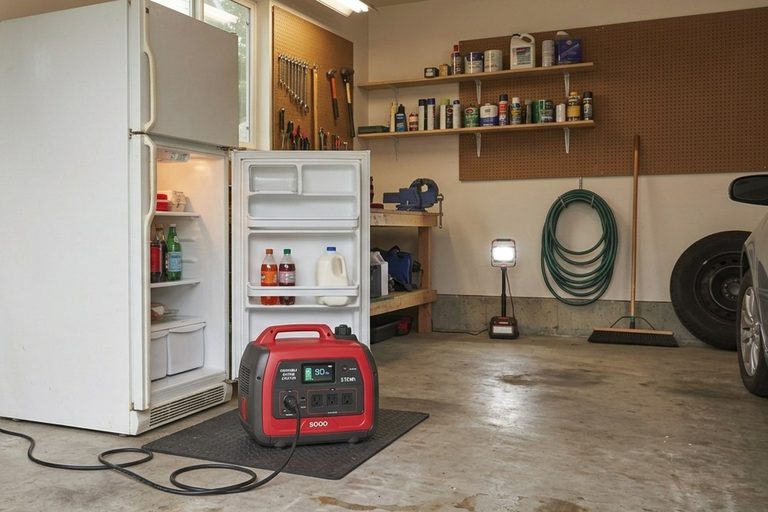
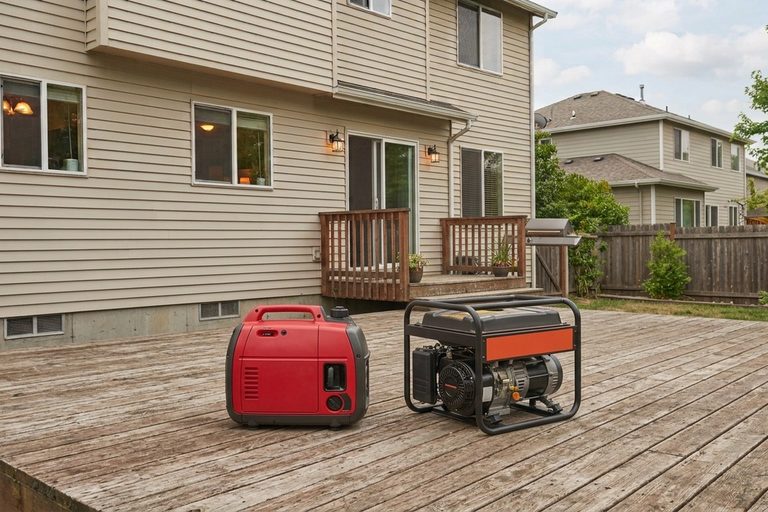
Keep the generator outside and away from the house. The Consumer Product Safety Commission says to run a portable generator only outdoors, at least 20 feet from the house, with the exhaust pointed away from your home and any other building. Never run it in the house, garage, basement, crawlspace, shed or on a porch. Opening doors or windows does not provide enough ventilation. In ice or snow, keep the generator dry and stable without moving it closer to the house.
Install CO alarms. The CPSC recommends battery-operated or battery-backup carbon monoxide alarms outside sleeping areas and on every floor. If an alarm sounds, get everyone outside and call 911. If you're shopping for a generator this fall, look for a model with automatic CO shut-off, which turns the engine off when carbon monoxide builds up.
Keep the cold food safe. Keep the fridge door closed as much as possible, generator or not. USDA guidance:
If you're unsure about something, the USDA Meat and Poultry Hotline is at 1-888-674-6854.
Planned this way, a modest generator, a few slow cookers and a roaster can get Thanksgiving dinner on the table even when the power is out.
Power died with the turkey in the oven? Check its temperature, move it to a hot outdoor grill fast, and finish it safely.
Learn how to calculate how long a 1,000, 2,000 or 3,600 Wh power station will run your fridge, with a simple formula and food-safety limits.
Compare inverter and conventional generators on noise, power quality, fuel use, cost and 240V needs, so you can pick the right one for your house.