Will a Generator Run the Oven, Fridge and Slow Cookers on Thanksgiving?
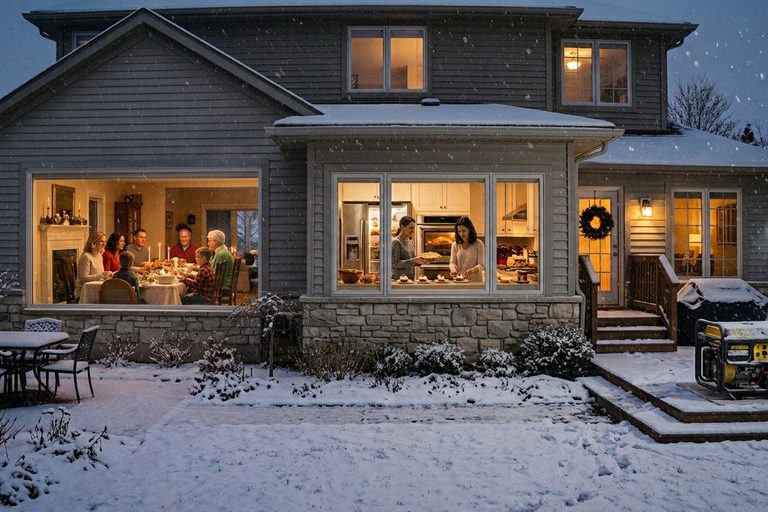
Most portable generators can run the fridge and slow cookers but not the oven. Here's how to plan a full Thanksgiving meal during an outage.
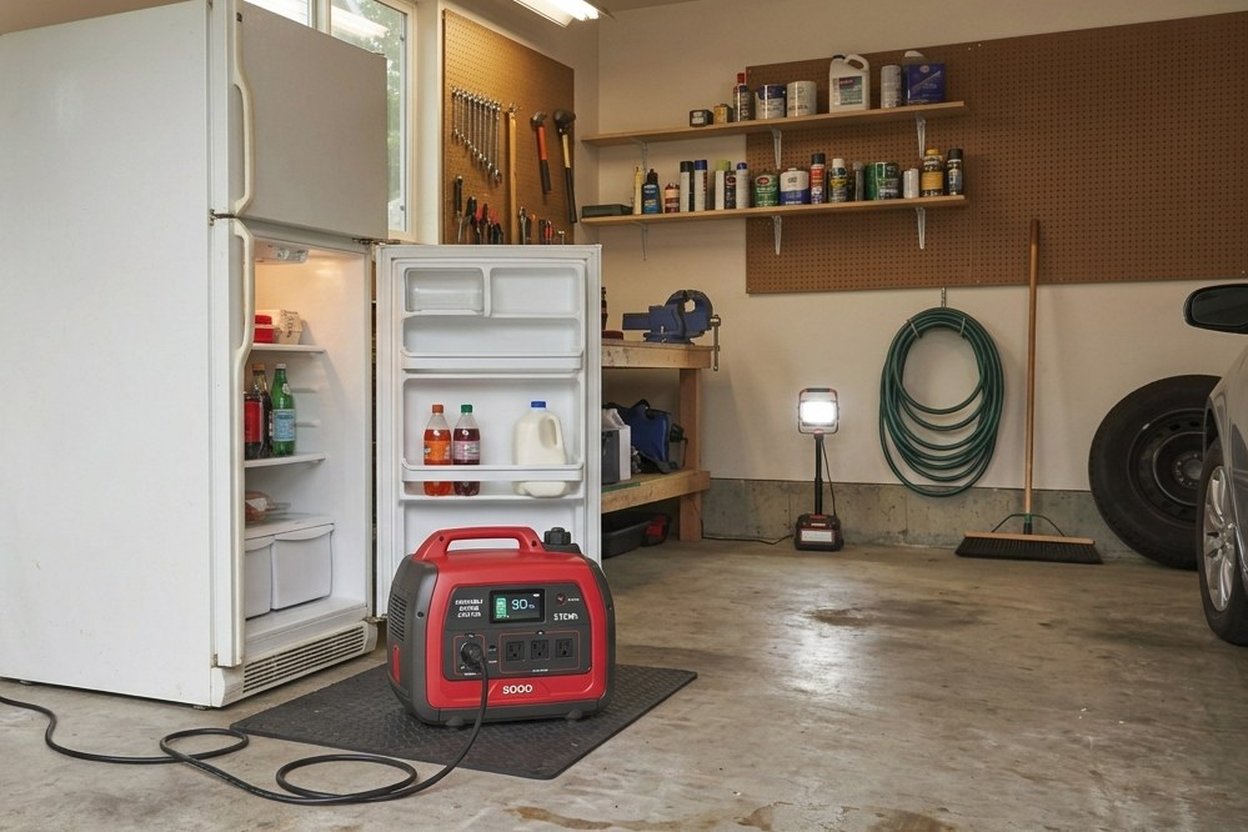
Learn how to calculate how long a 1,000, 2,000 or 3,600 Wh power station will run your fridge, with a simple formula and food-safety limits.
The wind picks up on an October night, the lights blink twice, and the house goes quiet. The first sound you notice missing is the hum of the fridge, and you're already thinking about the milk, the leftovers and the freezer full of meat. A portable power station can keep that fridge running. As a rough guide, a 1,000 Wh station runs a typical fridge for about 10 to 20 hours, a 2,000 Wh station for about 20 to 40, and a 3,600 Wh station for about a day and a half to three days. The rest of this article shows how to work out the number for your own fridge and station.
Most household refrigerators use about 1 to 2 kWh (1,000 to 2,000 watt-hours) a day. That works out to roughly 365 to 730 kWh a year. Anker puts a modern top-freezer model near the low end, at about 1 kWh a day.
A power station can't deliver every watt-hour printed on the box. Its inverter changes the battery's DC power into the AC power your fridge plugs into, and some energy is lost along the way. Real-world losses are often 15 to 25%. A common rule of thumb is to count on about 85% of the station's rated capacity:
Run time (hours) = station Wh × 0.85 ÷ fridge's daily Wh × 24
Here's how it works out for a fridge using 1.3 kWh (1,300 Wh) a day:
A thirstier fridge at 2 kWh a day cuts those figures to about 10, 20 and 37 hours. An efficient 1 kWh fridge stretches them to about 20, 41 and 73 hours.
Keep in mind that the 15-to-16-hour figure for a 1,000 Wh station comes from a rule of thumb, not a lab test. It's a planning number. Your fridge, your kitchen and your habits will move it up or down.
The math only works if you plug in your own fridge's numbers. There are three that matter:
To turn the yearly figure into a daily one, divide by 365. Here are some ENERGY STAR-listed models as examples:
Published running-watt figures vary a lot from source to source. Some guides list 300 to 500 W for a top-freezer and 500 to 800 W for a side-by-side or French-door model. Others say 100 to 200 W. A cheap plug-in watt meter settles the question. Plug the fridge into the meter for a full day and it will show the real kWh used, which beats any label or chart.
The meter will also show you something reassuring. The compressor cycles on and off all day, so the fridge's average draw is far below its nameplate watts. Anker's own example shows how this works: a fridge pulling 200 W for a total of 6 hours a day uses 1.2 kWh. Spread over 24 hours, that same fridge averages only about 50 W.
If your station quits sooner than the math says, a few things are usually to blame:
That's why marketing claims of 24 to 48 hours deserve a second look. Those figures assume a small, efficient fridge in good conditions.
Real reports vary widely. One owner on a camper forum said a DELTA 2 ran their fridge about 24 hours on the base unit alone, with roughly 48 more hours from an add-on battery. That was most likely a small, efficient fridge. A Best Buy Q&A answer for the larger EcoFlow DELTA 3 Max estimated only about 13 hours for a fridge averaging around 120 W. The fridge makes as much difference as the station does.
Here's what some popular stations offer, along with what their makers or sellers claim for running a fridge:
Treat every one of those run-time claims as a best case. Before you trust any of them, run your own fridge's numbers through the formula above.
Capacity isn't the only thing to check. The station's AC output has to handle the fridge's start-up surge. A fridge drawing 300 W while running might spike to 600 to 900 W for a moment at start-up. Every station on this list can handle that. A small camping unit may not, and when it can't, it shuts off right when the compressor tries to start. If you can find your fridge maker's surge figure, use it. Otherwise, plan for two to three times the running watts.
The cheapest way to get more hours is to keep the doors shut. Decide what you need before you open the door, grab it, and close it. This matters most around Thanksgiving, when the fridge is packed and the door opens all day.
Cycling stretches a station further. Run the fridge for a few hours to pull the temperature down, then unplug it and keep the door closed while it coasts. Plug it back in before it warms up. How long it can safely rest depends on your fridge and your kitchen, so check the thermometer before you decide when to plug it back in. Every hour the fridge sits unplugged is an hour of battery saved for later.
Know the food-safety rules before the power goes out:
Keep an appliance thermometer in both the fridge and the freezer. Ready.gov recommends watching the temperatures during an outage, and USDA guidance commonly uses 40°F or below as the safe line for refrigerated food. Freezer food that still has ice crystals can usually be refrozen. If the outage drags on, a cooler with ice can hold the most important items.
Recharge whenever you can. Solar panels can top up a station during the day, and many stations can charge from a car outlet while the car is running outdoors. That turns a one-day battery into a multi-day plan.
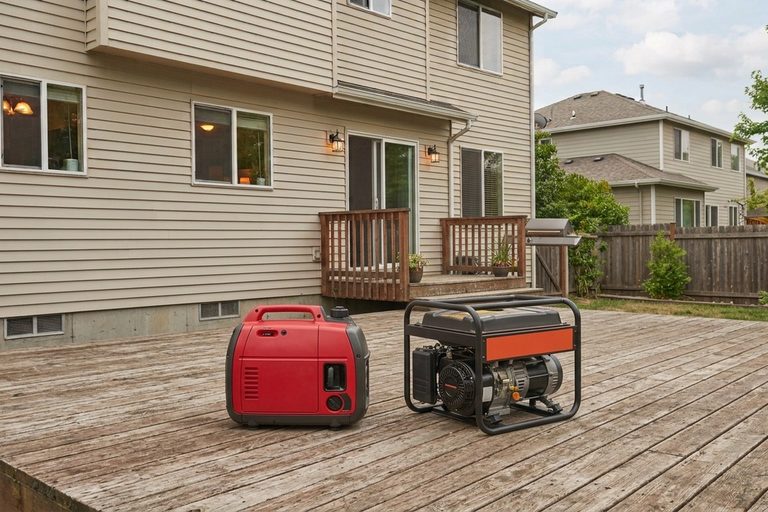
For an outage that lasts longer than a week, or when you need to run the freezer, furnace fan and well pump too, it's time for a generator. Always run it outdoors, at least 20 feet from windows, doors and attached garages, to keep carbon monoxide out of the house. Never backfeed your home through an outlet. Connecting a generator to the house takes a transfer switch installed by a licensed electrician.
Most portable generators can run the fridge and slow cookers but not the oven. Here's how to plan a full Thanksgiving meal during an outage.
Power died with the turkey in the oven? Check its temperature, move it to a hot outdoor grill fast, and finish it safely.
Compare inverter and conventional generators on noise, power quality, fuel use, cost and 240V needs, so you can pick the right one for your house.