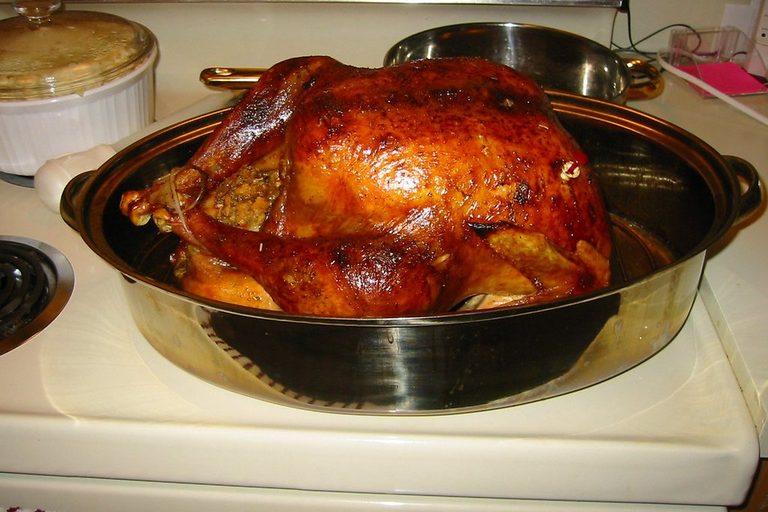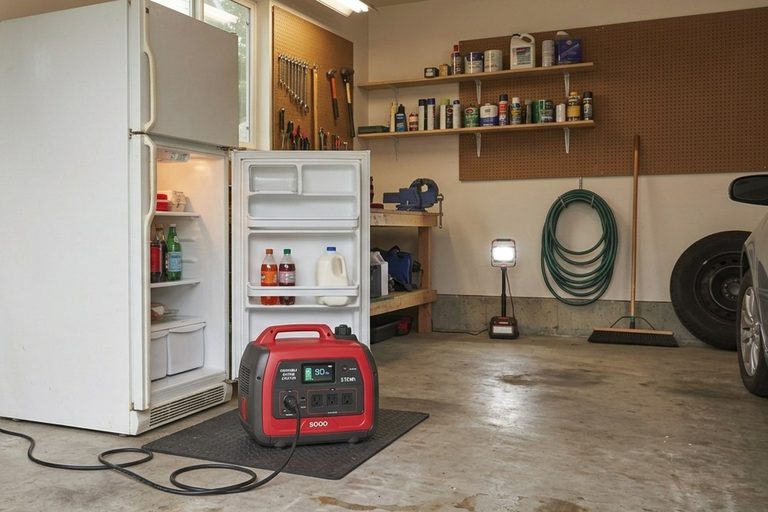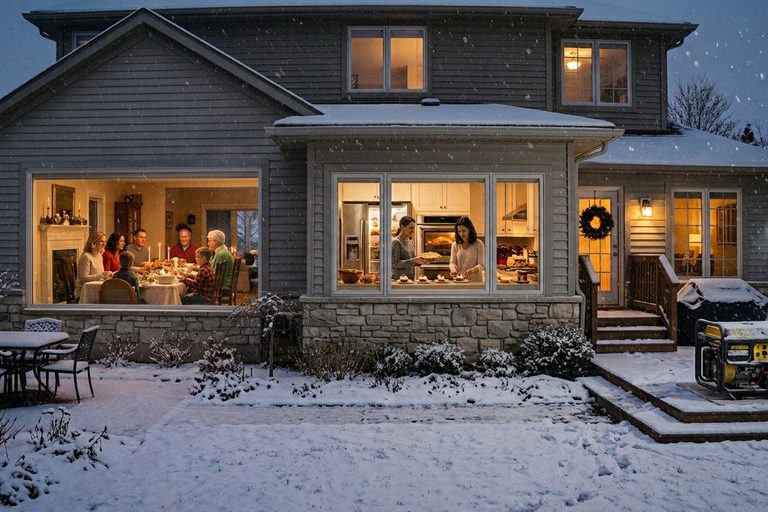
Will a Generator Run the Oven, Fridge and Slow Cookers on Thanksgiving?
Most portable generators can run the fridge and slow cookers but not the oven. Here's how to plan a full Thanksgiving meal during an outage.
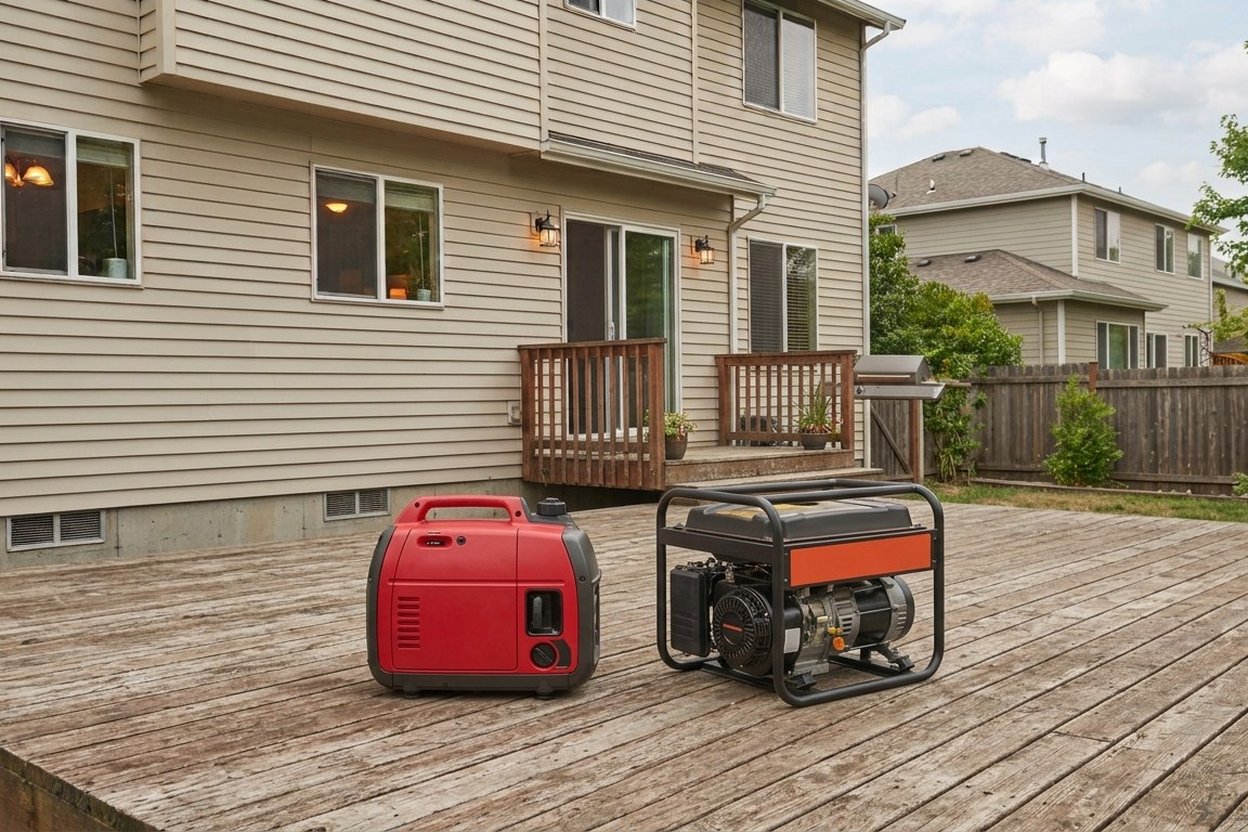
Compare inverter and conventional generators on noise, power quality, fuel use, cost and 240V needs, so you can pick the right one for your house.
The lights flicker, the furnace goes quiet, and the house goes dark. Over the next hour you work out what matters most: the fridge, the sump pump, the furnace, and the Wi-Fi so the kids can reach Grandma. Choosing a generator comes down to that same list. An inverter generator is quieter, easier on fuel and safer for electronics. A conventional generator gives you far more watts for the money and usually has the 240-volt outlet a well pump or transfer switch needs. Here's how to tell which one fits your house before the first ice storm.
Inverter generators run quieter, burn less fuel at light loads and make cleaner, steadier power. Conventional generators give you a lot more watts per dollar.
Choose an inverter if your outage list is mostly the refrigerator, the furnace blower, the router, phone chargers and a laptop. A 2,200-watt-class inverter such as the Honda EU2200i typically sells for about $1,100–$1,300. It's light enough to carry, quiet enough to live with and easy on fuel when it's running just a fridge and a few small things.
Choose a conventional generator if you need 240 volts for a well pump, an electric water heater, or a transfer switch that feeds selected circuits in your panel, and you want that power at a low price. The Generac GP8000E is a good example. It's rated at 8,000 running watts, has a 120/240V locking outlet, and costs roughly $1,100–$1,200 at the time of writing.
Look at those two prices. For about the same money you get roughly 2,200 watts from one and 8,000 from the other. The rest of the decision comes down to what that difference means for your house.
Household power comes out as a smooth, even wave. Total harmonic distortion (THD) measures how far a generator's output strays from that clean wave. A low number means smooth power that looks like what the utility sends. A high number means rougher power with ripples and spikes in it.
Inverter generators first make raw AC power, then convert it to DC, then electronically rebuild it as clean AC. That's how they typically stay below about 3% THD. A conventional generator sends power straight from the alternator, and its THD usually runs somewhere around 9% to 30%, depending on the model and the load.
Here's what that means in your house:
Plenty of newer conventional generators advertise low THD. If you're leaning conventional, check the spec sheet for that number.
The cleaner power and the quieter running come from the same design. A conventional generator's engine runs at a fixed speed whether it's powering one lamp or the whole kitchen. An inverter's engine speeds up and slows down with the load. With just the fridge running, it idles along. When the microwave comes on, it revs up.
That makes a big difference in noise. Inverters typically run around 48–65 dB(A), while conventional units run about 70–95 dB. A Consumer Reports engineer has said inverters are "generally quiet enough not to drown out nearby conversation." A conventional unit at the loud end of that range is something your neighbors will hear all night.
Some real numbers from the big Honda inverter, the EU7000iS: 58 dB(A) at full rated load and 52 dB(A) at quarter load.
Matching engine speed to the load also saves fuel, especially overnight when the house only needs a little power. Sellers often claim savings of 20–40%, but your results depend on how lightly you run it. Runtime figures show the difference more clearly:
Because of how far the Honda stretches at light load, one fill-up can carry an inverter through a whole night of fridge-and-furnace duty.
To compare the two types fairly, put two large units side by side.
Honda EU7000iS (inverter) - 5,500 running watts, 7,000 maximum - About $4,899–$4,999 at the time of writing, plus freight, setup and tax - 5.1-gallon tank, about 6.5 hours at rated load and 16–18 hours at quarter load - About 261–263 lb dry - Two 20A 120V GFCI outlets, one 30A 120V locking outlet, and one 30A 120/240V locking outlet - 3-year residential warranty
Generac GP8000E (conventional) - 8,000 running watts, 10,000 starting - About $1,100–$1,200 at the time of writing - 7.9-gallon tank, about 10–11 hours at half load - About 198 lb - Two 20A 120V GFCI duplex outlets and a 30A 120/240V locking outlet (L14-30R) - Some versions include Generac's COsense, which shuts the unit down if carbon monoxide builds up to dangerous levels
Per running watt, the Honda costs about 90 cents and the Generac about 14 cents, so the inverter costs roughly six times as much for each watt. What you get for that money is lower noise, cleaner power, better fuel use at light loads and Honda's reputation for reliability.
The 240-volt question matters just as much as price. According to Consumer Reports, mid-size inverters in the 2,500–5,000 watt range usually lack the 240V connection a transfer switch needs. Big inverters like the EU7000iS have one, but you pay for it. Most conventional generators in this size class include it as standard.
You can also connect two compatible inverters in parallel, as long as the manufacturer approves both units for parallel use. Running a pair gives you combined wattage, and you can carry each unit separately.
Both kinds of generator produce carbon monoxide, and both can be deadly if they're used the wrong way.
Fall is a good time to test your CO alarms, so do it when you set the clocks back.
Match the machine to your outage list:
As a rough guide, about 2,000 watts or less covers the basics, 2,000–5,000 watts covers a fridge plus larger appliances, and anything above 5,000 watts moves into whole-home backup.
Before you shop, walk through the house with a notepad. Write down the running and starting watts from the label on everything you want powered, and add them up. Your totals and whether you need 240V will tell you which type to buy. With Thanksgiving coming, picture a fridge full of turkey and fixings and size for that.
Most portable generators can run the fridge and slow cookers but not the oven. Here's how to plan a full Thanksgiving meal during an outage.
Power died with the turkey in the oven? Check its temperature, move it to a hot outdoor grill fast, and finish it safely.
Learn how to calculate how long a 1,000, 2,000 or 3,600 Wh power station will run your fridge, with a simple formula and food-safety limits.