72-Hour Kit Checklist for Midwest Families
A practical 72-hour emergency kit for a Midwest household, built around the storms, blizzards and outages we actually get. What to pack, where to keep it, and how to keep it fresh.
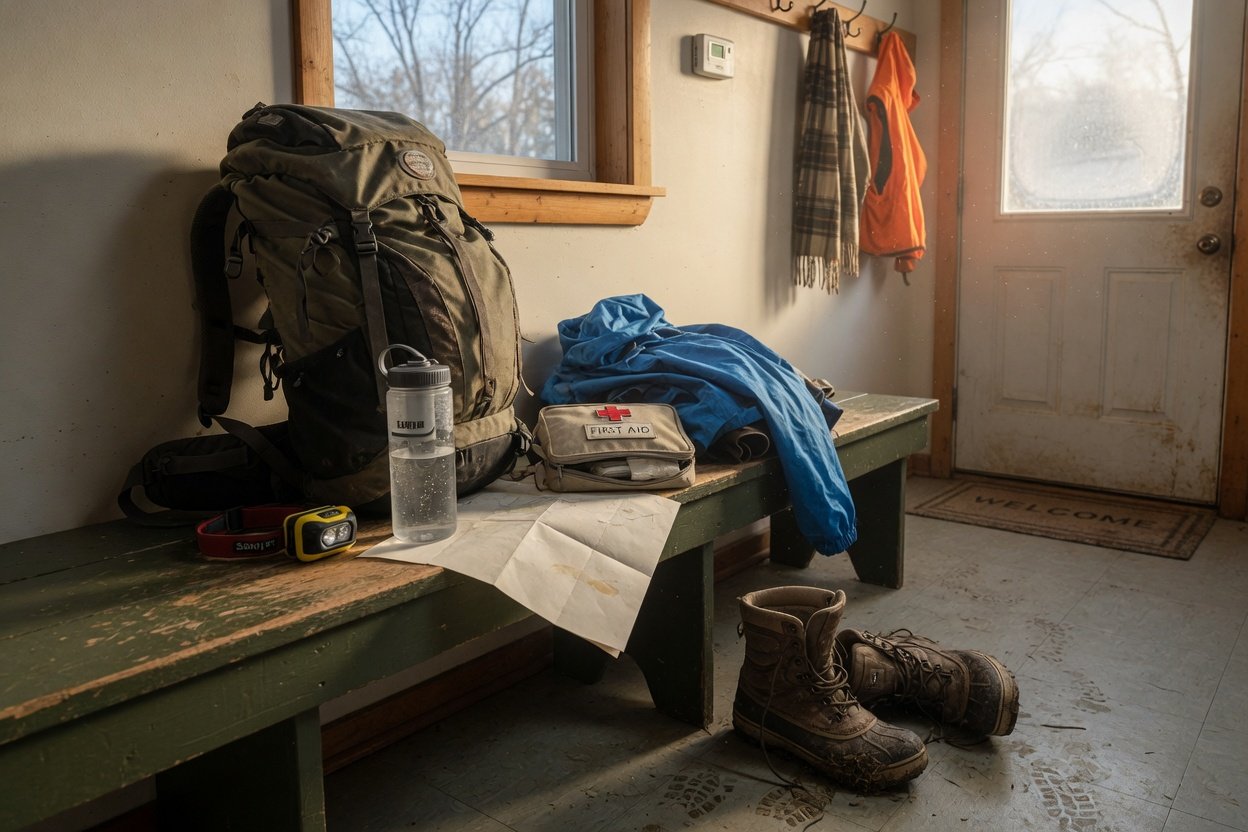
A bug-out bag is what you grab when you have to leave in minutes. What goes in it, what to leave out, and how to keep it light enough that you'll actually carry it.
For most emergencies, the right move is staying home. Your house has your food, water, beds and tools. See why you should stay home the first 72 hours. But sometimes you have to leave: a chemical spill, a fire, a flood, a gas leak, or an evacuation order. When that happens, you might have minutes. That's what a bug-out bag is for.
A bug-out bag should get one person through about 72 hours away from home, wherever you end up: a shelter, a relative's house, a hotel, or a car. It needs to be:
People overpack. Leave out:
A bag you can't carry is worse than no bag.
Check the bag twice a year, when the clocks change: rotate food and water, check batteries, swap seasonal clothes, and update medicines and documents.
A bug-out bag is the backup plan. Your home is still the main plan. See 72-hour kit checklist for Midwest families for the stay-at-home version.
A practical 72-hour emergency kit for a Midwest household, built around the storms, blizzards and outages we actually get. What to pack, where to keep it, and how to keep it fresh.
When a disaster hits your town, the safest place is usually your own home. Why the first three days are the most dangerous time to be out, and how to set up…
In a disaster, cell networks jam or go down. How to set up an out-of-area contact, meeting places, a paper contact list, and the texting trick that gets through when calls don't.