How to label and store Mylar bags so you know what's inside
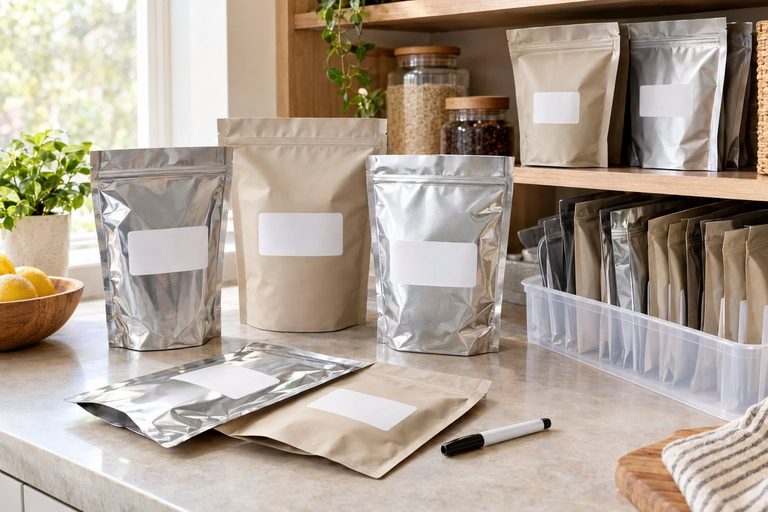
Learn what to write on Mylar food bags, which pens last, and how to store dry food with oxygen absorbers so you can rotate it safely.
You don't need freeze-dried buckets to have three months of food. How to build a pantry a little at a time from the store you already shop at, what to buy, and how to rotate it.
A lot of people think a food supply means a pallet of freeze-dried buckets and a big credit card bill. It doesn't. The most practical food supply is a deep pantry of the normal food you already eat, built up a little at a time and eaten in rotation, so nothing goes to waste.
Three months covers most of the things that actually happen to families:
You don't have to get there all at once. Start with two weeks, then a month, then three.
The biggest mistake is buying food you don't normally eat. It sits on the shelf, expires, and gets thrown out.
The simplest method: every time you shop, buy one or two extra of something on your list. When it's on sale, buy several. It adds a few dollars a week and builds up faster than you'd think.
Setting aside even $10 a week adds up over a year.
Staples:
Easy meals for days when cooking isn't possible:
Don't forget:
First in, first out. Put new cans at the back and pull from the front. Check dates every few months, and use anything close to expiring in a normal week's meals.
Most canned food stays safe well past the "best by" date if the can isn't swollen, rusted or dented badly, but quality slowly drops. Rotating keeps it fresh.
Cool, dry and dark is best. A basement shelf, a closet, or under a bed works. Avoid hot garages and attics; heat shortens shelf life.
A food supply is only as good as your ability to use it:
Don't advertise your pantry. When things get tight, people remember who said they had food. See the grey man.
A deep pantry is the quiet prep that pays off more often than any other. You'll use it during a sick week or a tight month long before any disaster.
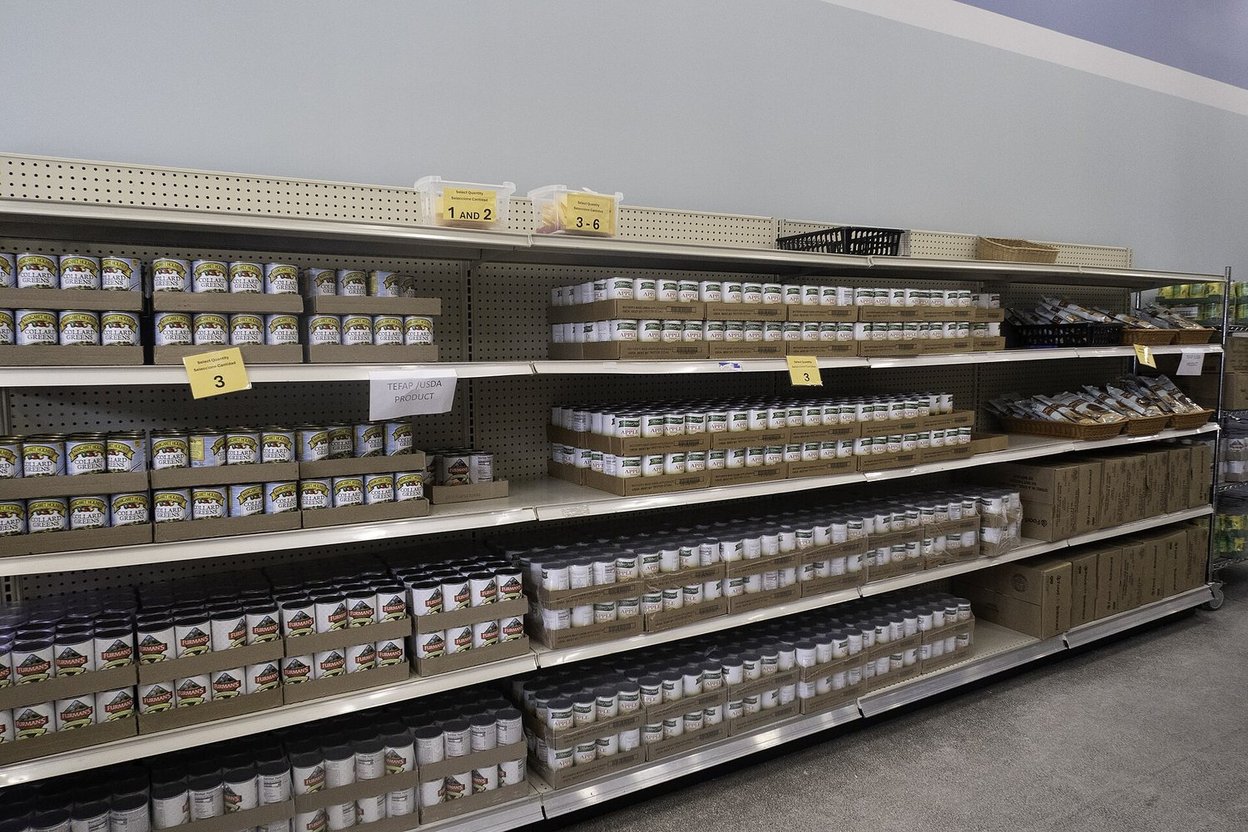
Photo: The Emergency Food Assistance Program (TEFAP) (20250110-USDA-FNS-UNK-080)_(20250110-USDA-FNS-UNK-080).jpg) by USDAgov, Public domain.
Learn what to write on Mylar food bags, which pens last, and how to store dry food with oxygen absorbers so you can rotate it safely.
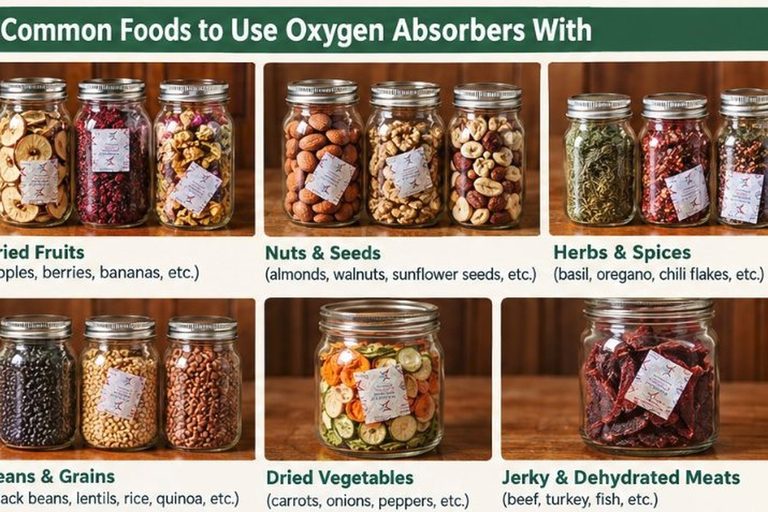
Which foods benefit from oxygen absorbers, which don't need them, and which are unsafe with them. Includes sizing and a pre-sealing checklist.
The 4-hour fridge rule, the 48-hour full freezer, and the 40-degree line. What to keep, what to toss, and how to make your cold food last longer in an outage.