The covered porch is still inside for carbon monoxide
A covered porch counts as indoors for carbon monoxide. Learn the 20-foot rule, safe generator placement, and how to set up CO alarms.
What 400 or 800 watts of portable solar refills in a day, June vs. December, and which outage loads it can keep running.
With 400 watts of panels feeding a battery, you can count on about 1,500 watt-hours a day in summer and roughly 600 in December. That covers phones, LED lights, a radio, a CPAP without the heated humidifier, and part of a fridge. Double it to 800 watts and a winter day gets you about 1,200 watt-hours, enough for a modern fridge or the small stuff, but usually not both. Neither size will run a space heater, a well pump or central air.
The gap between June and December is the whole story. Here's the math so you can run it for your own house.
Panel watts × peak sun hours × 0.75 = watt-hours you can actually put in the battery.
A "peak sun hour" is one hour of full, overhead-strength sunlight. A cloudy six-hour day might add up to two peak sun hours. NREL-based figures put most Midwest states at about 4 to 4.5 peak sun hours a day averaged across the year (Illinois about 4.3, Ohio about 4.1, Michigan about 4.0).
That yearly average hides a lot. December usually gives 40 to 60 percent of what summer does. Across the northern states that means planning on about 2 peak sun hours a day in December, sometimes less, and close to nothing on gray, snowy days.
The 0.75 is a planning haircut. NREL's PVWatts calculator assumes 14 percent losses for a permanent roof system, and that's before the inverter. A folding panel leaning on a lawn chair loses more to bad angles, heat, dirt and battery conversion. Plan on 75 percent and enjoy the good days when you beat it.
Those are averages. One clear cold day in January can beat them, and a week of lake-effect gray can drop way below them. Your battery covers the bad days, and the panels catch it back up on the good ones.
Here's what typical outage loads use over a day. Check the label or a plug-in watt meter for your own stuff.
With 400 watts (about 600 Wh coming in):
That's a comfortable light-and-communication setup, and it keeps a CPAP user sleeping. It does not keep a fridge going. Run the fridge off the battery and you'll drain it in a day or two, with the panels only putting back about half.
With 800 watts (about 1,200 Wh coming in):
That's already more than the panels made. The fix most people use is to run the fridge in shifts: a few hours on, a few off, doors shut. That cuts its draw a lot and leaves room for lights and phones. Use a fridge thermometer and keep the inside at 40°F or below. Our post on what in the fridge has to go on day two covers the food-safety side. If insulin lives in that fridge, read insulin when the fridge is off too.
In summer, 800 watts covers a fridge and everything small with room to spare. Fall and winter are what you need to plan for.
Small solar is a trickle. These loads need a generator or a much bigger system:
We go through why in what a power station won't run. For heat in a winter outage, the plan is one warm room, not solar.
The sun sits low from October through February and the days are short. A few things help a lot:
Most lithium batteries shouldn't be charged below freezing, and many power stations will slow or stop charging when they're cold. Keep the power station inside the house and run the panel cable through a cracked window or door with a towel stuffed in the gap. Panels don't mind the cold. Batteries do.
Before you rely on it, check the station against recall lists and store it the way the maker says. See battery pack recalls and storing lithium safely.
Brand-name 400-watt folding panels run about $600, and third-party 400-watt folding panels list for roughly $175 to $370. You'll also need a power station or battery with enough capacity to ride through a night and a couple of gray days. We compare them in power station vs. generator. Panels and a battery cost money up front, but they run quietly indoors with no fuel and no carbon monoxide.
The main thing to remember: size it for December, not June.
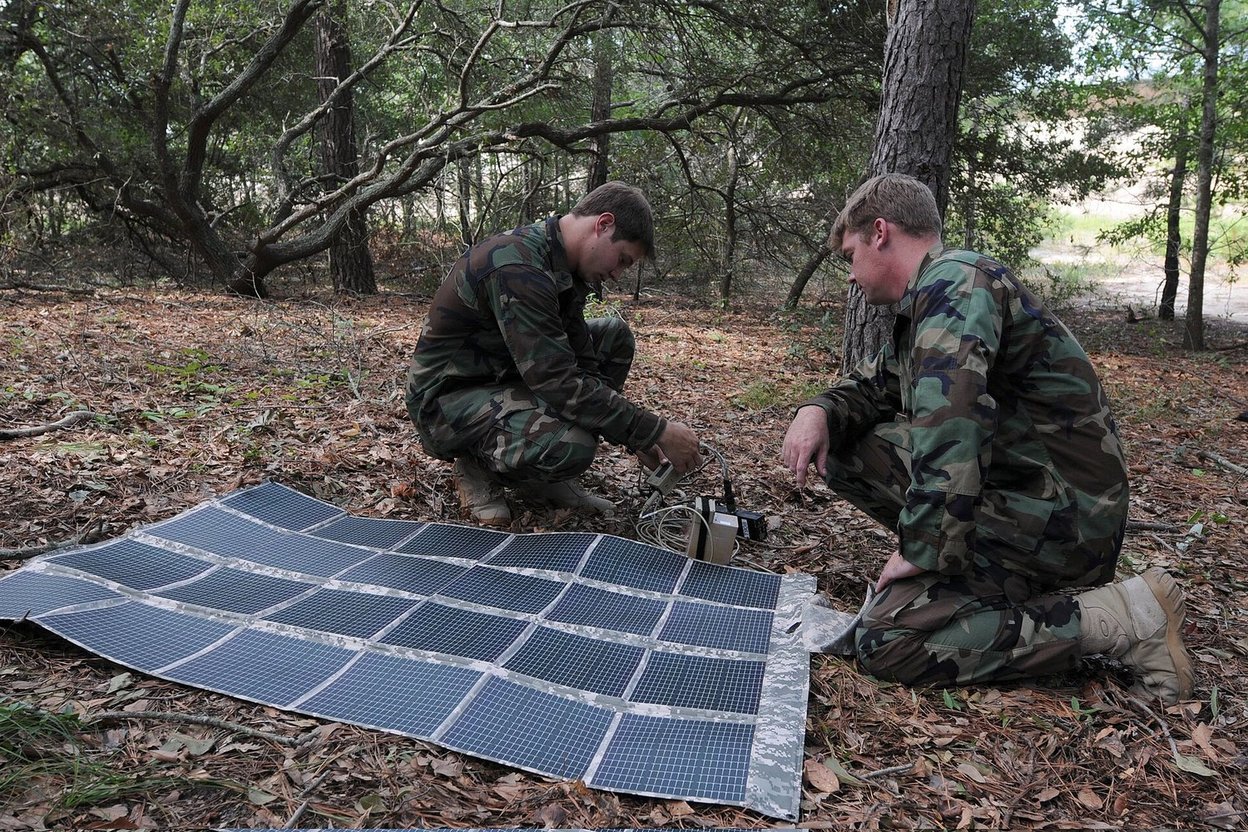
Photo: Defense.gov News Photo 110906-N-YO394-014 - Explosive Ordnance Disposal Technici by Petty Officer 2nd Class Paul D. Williams, U.S. Navy, Public domain.
A covered porch counts as indoors for carbon monoxide. Learn the 20-foot rule, safe generator placement, and how to set up CO alarms.
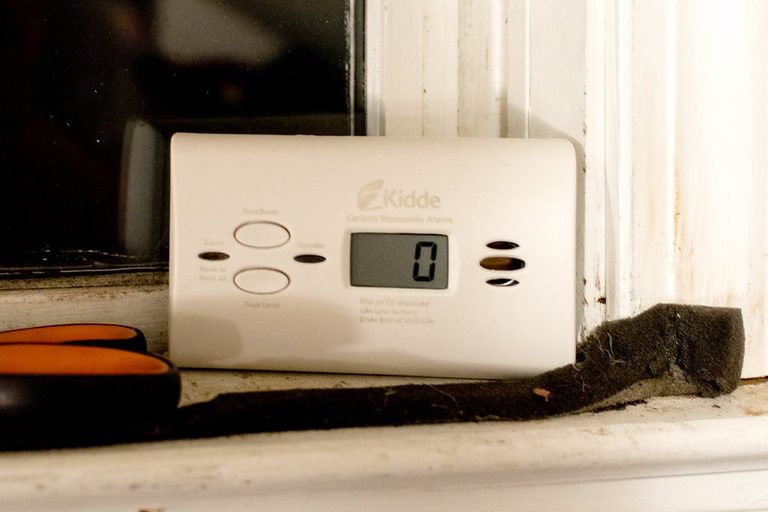
Check that every floor and sleeping area has a battery-backup CO alarm, placed and tested, before the first winter power outage.
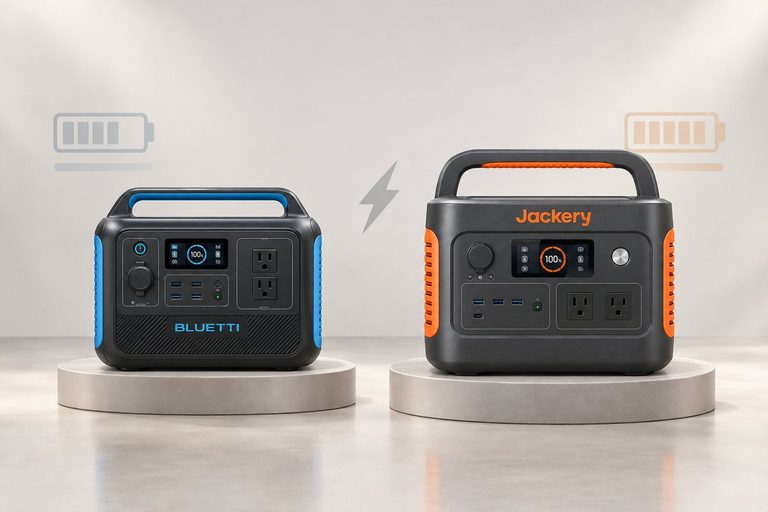
Bluetti Elite 100 vs. Jackery Explorer 1000 compared on runtime, solar charging, and price, with a clear pick for keeping a home running through an outage.