The covered porch is still inside for carbon monoxide
A covered porch counts as indoors for carbon monoxide. Learn the 20-foot rule, safe generator placement, and how to set up CO alarms.
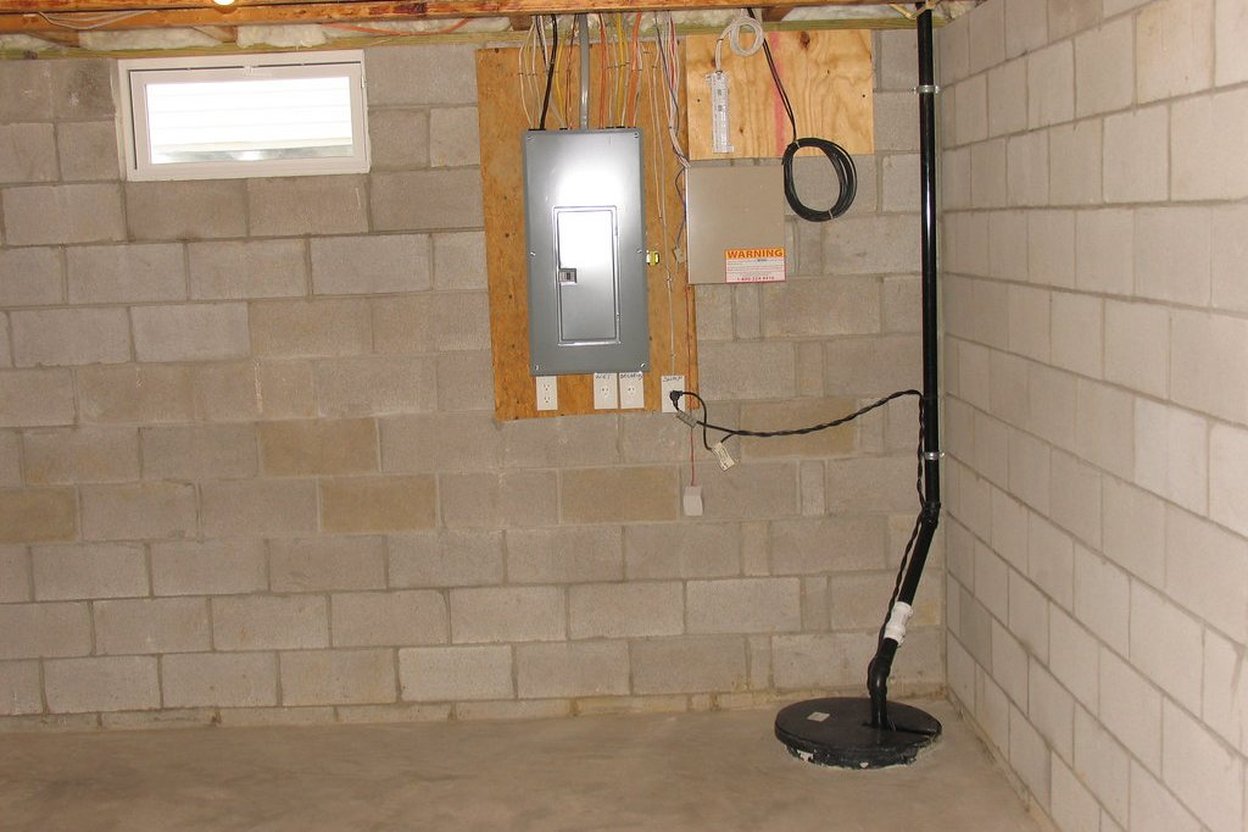
Discover whether your backup can start a sump pump when power fails, comparing battery backup, generators, power stations, and more.
It's an October evening and rain has been hammering the gutters for hours. You hear the sump pump kick on in the basement, then the lights flicker and go out, and the pump stops. Can your backup power start it again? Yes, but only if the backup can handle the short, hard jolt a motor needs to start and can then keep it running. A battery backup pump, a generator and a portable power station each handle that in different ways. You can find out which one works for your pump tonight, before the next storm.
A typical primary sump pump plugs into a regular outlet. Zoeller rates its popular M53 at 115 volts, and Wayne rates its CDU series at 120 volts, 60 Hz. When the house loses power, the pump loses power too.
A backup source has two numbers that matter. The running (continuous) rating has to cover what the pump draws while it works. The peak or surge rating has to cover the brief spike when the motor first starts. These are separate ratings, and passing one doesn't mean passing the other.
The amp figure on your pump's label doesn't tell you the starting draw. Zoeller's own pump-identification guide treats that number as full-load amperage, which is the running draw. The M53 pages don't list a separate starting figure. That gap is why a backup that looks big enough on paper can still trip off the first time the float switch clicks.
Fall storms can do everything at once: fill the pit, bring down the lines, and turn cold overnight. On September 7, 2026, severe storms left 34,025 Evergy customers without power around Kansas City. After heavy rain on October 2, 2026, a Lincoln, Nebraska, report described basements in the Omaha and Lincoln area with up to about three inches of standing water. A foundation-repair manager in that report urged homeowners to plan how their sump pump would run if the power failed. In July 2024, storms dropped 5 to 7 inches of rain in eight hours across parts of the Midwest, and 215,000 Illinois customers were still without power by the next noon.
Late in the season, cold adds another risk. Water left standing in a discharge line can freeze, and a pump that keeps running against that blockage can overheat. A line pitched to drain dry between cycles has nothing left in it to freeze.
You'll also be doing all this in the dark, possibly with wires down. The CDC says never to touch a fallen power line and never to drive through standing water that has downed lines in it.
Horsepower isn't watts. To find running watts, multiply the nameplate volts by the full-load amps:
A bigger horsepower number doesn't always mean a much bigger draw. Zoeller lists its 1/2 HP M98 at 9.4 amps, slightly below the M53's 9.7.
Flow also drops as the pump has to lift water higher. The M53 moves 43 gallons per minute (about 2,580 gallons per hour) at 5 feet of head and 34 gallons per minute (about 2,040 gallons per hour) at 10 feet, with a 19.25-foot maximum. On one current Wayne table, the CDU800 drops from about 5,100 gallons per hour at zero head to about 3,840 at 10 feet. Wayne's older and newer manuals differ, so use the curve for your exact model.
Startup amps usually aren't on the label at all. So a backup sized only to running watts may still fail on the first start, especially if a refrigerator or furnace blower starts at the same moment. Everything starting at once adds up.
This is the only option here that doesn't require you to go outside. It's a second 12-volt pump with its own float switch and a charger. When the utility power drops, it takes over by itself.
Wayne ESP25: Wayne's table lists 2,900 gallons per hour at 0 feet, 2,340 at 5 feet, 1,680 at 10 feet and 600 at 15 feet. Wayne advertises up to 26 continuous hours, but only with its 75 amp-hour battery and only when 5 gallons per minute is flowing in. That's about 300 gallons per hour, far less than the pump can move. On October 7, 2026, Home Depot listed the ESP25N at $349.99, and the recommended WSB1275 battery is sold separately at $276.62 there ($289.99 at Sump Pumps Direct). That's roughly $627 before installation. The current product page lists a 2-year limited warranty.
Zoeller Aquanot 508: With a fully charged deep-cycle size 27 battery, Zoeller says it runs about 5.5 hours continuously, or about two days at a 10 percent duty cycle. Zoeller lists 35 gallons per minute at 10 feet. A fully drained battery may take up to 24 hours to recharge.
Basement Watchdog: At a 10 percent duty cycle, Basement Watchdog lists about 40 hours for Big Dog CONNECT, 48 for Special CONNECT and 80 for its Emergency system. The company notes that actual runtime depends on how fast water comes in.
These figures use different pumps, batteries and assumptions, so they can't be compared directly. Cold, an older battery and a higher lift all cut runtime. A hard rain that keeps the pump running nonstop drains the battery much faster than the "hours of protection" on the box suggests. Use a deep-cycle standby battery, not a car battery. Basement Watchdog notes that standby batteries are built to be drained and recharged and last longer in this job.
For a long outage, a generator is the tool that can run your main pump. Take the Honda EU2200i: 1,800 running watts and 2,200 peak watts at 120 volts. A pump drawing about 1,100 to 1,200 watts leaves roughly 600 to 700 running watts of headroom. Whether 2,200 peak watts covers your pump's start depends on a figure most labels don't give. The only reliable way to know is to test it on a dry afternoon before you need it, with nothing else plugged in. The Honda's 0.95-gallon tank lasts about 3.2 hours at rated load and 8.1 hours at quarter load, so stock fuel for the pump to keep cycling overnight.
If the generator goes to the pump alone, the CDC's food-safety window applies. A closed refrigerator keeps food safe for about 4 hours. A full freezer lasts about 48 hours, or about 24 if it's half full.
Safety rules can turn a plan into "not tonight":
If you're shopping, look for models certified to PGMA G300-2018 or UL 2201. They have a carbon monoxide shutoff, and the CPSC estimates they would cut those deaths by 87 and 100 percent respectively.
A big battery behind a small inverter still won't start the motor. The EcoFlow DELTA 2 offers 1,800 watts continuous, a 2,700-watt surge and 1,024 watt-hours of pure sine wave output. Whether that surge covers your pump's start is something to test, not assume.
X-Boost doesn't solve this. EcoFlow says it kicks in above rated output and tops out at 2,200 watts. The company says it suits heating devices better than appliances with strict voltage needs and tells owners to test their specific device.
To estimate runtime, divide watt-hours by the pump's running watts. With an M53 at about 1,116 watts, 1,024 watt-hours comes to under an hour of actual pumping, before inverter losses. Because the pump cycles on and off, that hour stretches across a longer stretch of the storm. But it only counts if the station got the motor started.
On city water, a water-powered backup like Liberty's SumpJet SJ10 needs no electricity. It works at 20 to 100 psi, and Liberty recommends at least 30. At 40 psi and an 8-foot lift, it removes about 12.5 gallons per minute. It won't work on a private well with an electric pump, and it uses city water the entire time it runs. Liberty claims about 2 gallons of sump water removed per gallon of city water, while Ann Arbor's city sheet says it's closer to the reverse. Your water meter will show which is true for your house. These units need a reduced-pressure backflow preventer. Ann Arbor inspects them every three years, and Washington Township, Michigan, requires a licensed plumber, a permit and yearly testing. Check your local rules.
Before the next storm, run through this list:
If water is already on the floor, treat it as an electrical hazard. The CDC says to run a sump pump only after an electrician confirms the power is safe, and to wear rubber boots around electrical equipment in wet areas.
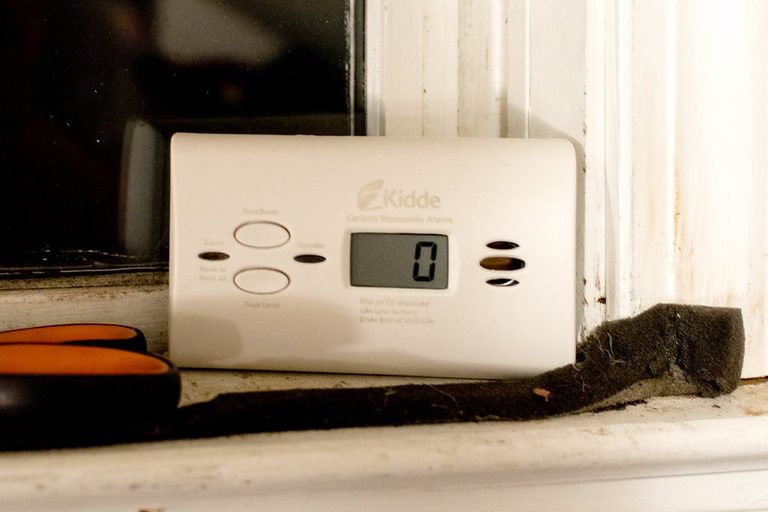
A covered porch counts as indoors for carbon monoxide. Learn the 20-foot rule, safe generator placement, and how to set up CO alarms.
Check that every floor and sleeping area has a battery-backup CO alarm, placed and tested, before the first winter power outage.
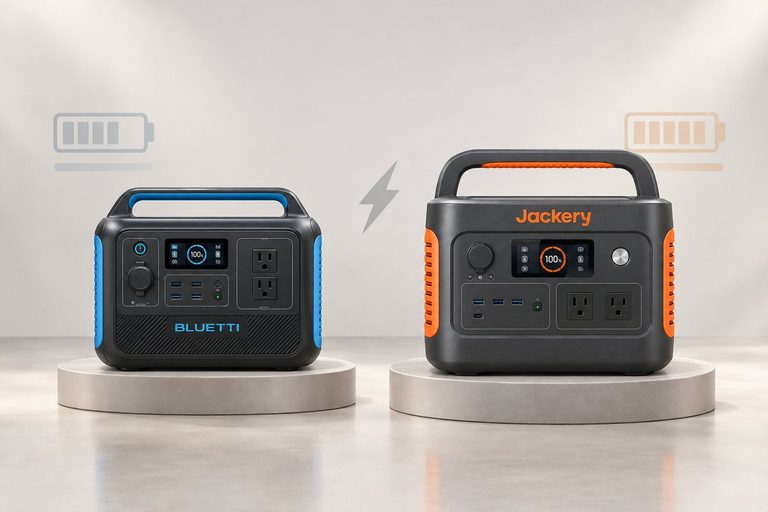
Bluetti Elite 100 vs. Jackery Explorer 1000 compared on runtime, solar charging, and price, with a clear pick for keeping a home running through an outage.