The covered porch is still inside for carbon monoxide
A covered porch counts as indoors for carbon monoxide. Learn the 20-foot rule, safe generator placement, and how to set up CO alarms.
What a standby generator really costs installed in 2026 ($7,000–$20,000), what the money pays for, and why fall installs take 4–8 weeks or longer.
As of October 2026, a home standby generator professionally installed costs about $7,000 to $20,000. Most families who buy the common 22 kW size pay roughly $10,000 to $14,000 all-in. The generator itself is only about half of that bill. The rest is the transfer switch, labor, the pad, the gas line, permits and inspections.
As for the wait: for most houses it isn't the generator that's backordered. The holdups are the installer's schedule, the permit office and sometimes the gas utility. In the fall, after a stormy summer, a 4–8 week job can easily run longer.
Cost guides published in 2026 mostly agree on these installed ranges (as of October 2026):
If you haven't figured out what size you need, do that before you call anyone. Our guide on how to size a backup generator walks through it, and starting watts vs. running watts explains why a well pump or AC compressor bumps you up a size.
You'll see wildly different "average" numbers online. Angi lists a national average near $5,157 for whole-house generator installation, and its 20–24 kW range is about $5,000–$6,500. Other 2026 guides put the same size at $10,000 or more installed.
The difference is mostly what's counted. Angi's figures include smaller and portable setups, and the 20–24 kW range lines up with what the unit alone costs. The higher guides count the whole job. When you budget, assume the box is about half and the install is the other half.
Here's roughly how a mid-size job breaks down, per 2026 cost guides (as of October 2026):
Things that push you toward the high end:
If the price makes you wince, compare it with a portable generator and a manual setup. Our transfer switch vs. interlock kit post covers the cheaper way to feed the panel. Portable power station vs. generator covers the battery route.
There's real news behind the headlines about generator shortages, but it's mostly about the big machines.
AI data centers need backup power for nearly every megawatt they draw, and they're buying large generators years in advance. Generac said on its second-quarter 2026 earnings call that its data center backlog had reached about $1.6 billion, including a hyperscale deal of roughly $700 million for delivery in 2027. Industry dealers report lead times of a year or more for the multi-megawatt units those sites use.
That's a different product line from the air-cooled unit beside your house. On the same call, Generac said home standby sales had returned to growth even though outages ran more than 30% below normal, and it didn't describe home units as short. It also said in-home consultations were up, driven by the Midwest after multiple storms. So more people are getting quotes, and they're all calling the same local installers.
For a typical house, the wait looks like this:
Guides from installers put the whole process at about 3–8 weeks from permit application to final inspection. Add a utility meter upgrade or a fall rush and you're past two months.
Installers consistently say demand peaks in the fall, before winter storms, and right after any major outage. Spring through early summer is the quiet stretch, when contractors, permit offices and suppliers are least backed up.
So if you sign a contract in October, don't count on it running for Thanksgiving. Plan as if your first ice storm will hit before the generator is in. That means:
If you can wait until spring, you'll likely get a shorter queue and more installers willing to compete for the job.
These steps cut weeks off the wait:
Budget roughly double the generator's sticker price for the finished job, and assume a fall install takes 2 months, not 2 weeks. If you need power this winter, get your backup plan ready now, and let the standby generator be what you have for the storms after that.
To see how long outages actually run around here, read Midwest power outages: how long they really last.
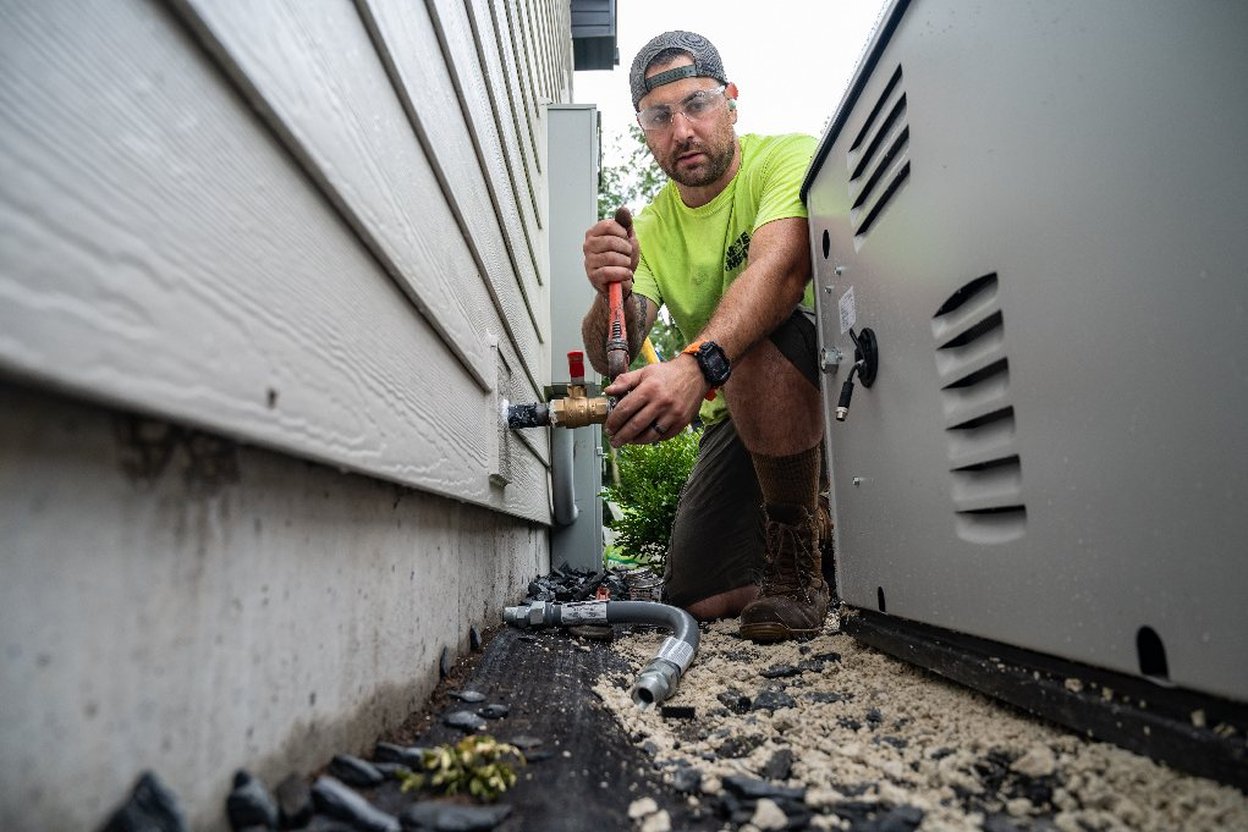
Photo: Generac standby generator gas line hookup by Generac Power Systems, used with credit.
A covered porch counts as indoors for carbon monoxide. Learn the 20-foot rule, safe generator placement, and how to set up CO alarms.
Check that every floor and sleeping area has a battery-backup CO alarm, placed and tested, before the first winter power outage.
Bluetti Elite 100 vs. Jackery Explorer 1000 compared on runtime, solar charging, and price, with a clear pick for keeping a home running through an outage.